Hidden · Richland, Washington State, United States
B Reactor
The world's first large-scale nuclear reactor, built beside the Columbia River in 1944 and now a National Historic Landmark visited on guided tours with advance reservation.
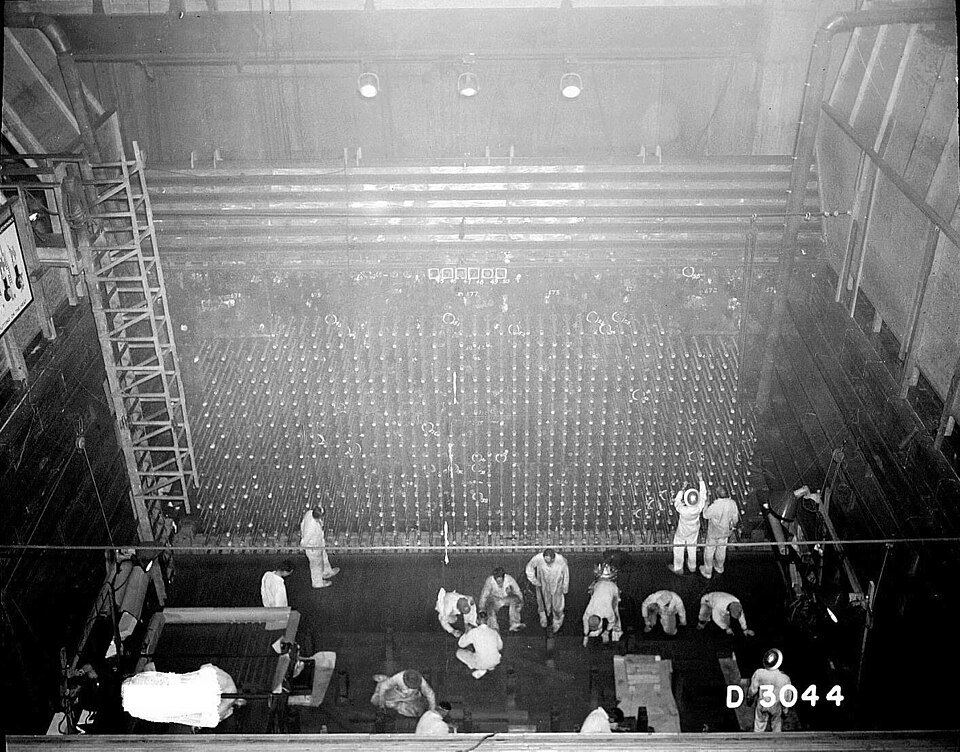
A graphite block the size of a small house, built to make plutonium.
The B Reactor stands on the Hanford Site near Richland, Washington. It was built by DuPont for the Manhattan Project to turn natural uranium into plutonium-239, which was then separated chemically at the site's T Plant. At 250 megawatts it was far larger than the pilot reactor at Oak Ridge, Tennessee, which had reached about 4 megawatts by mid-1944.
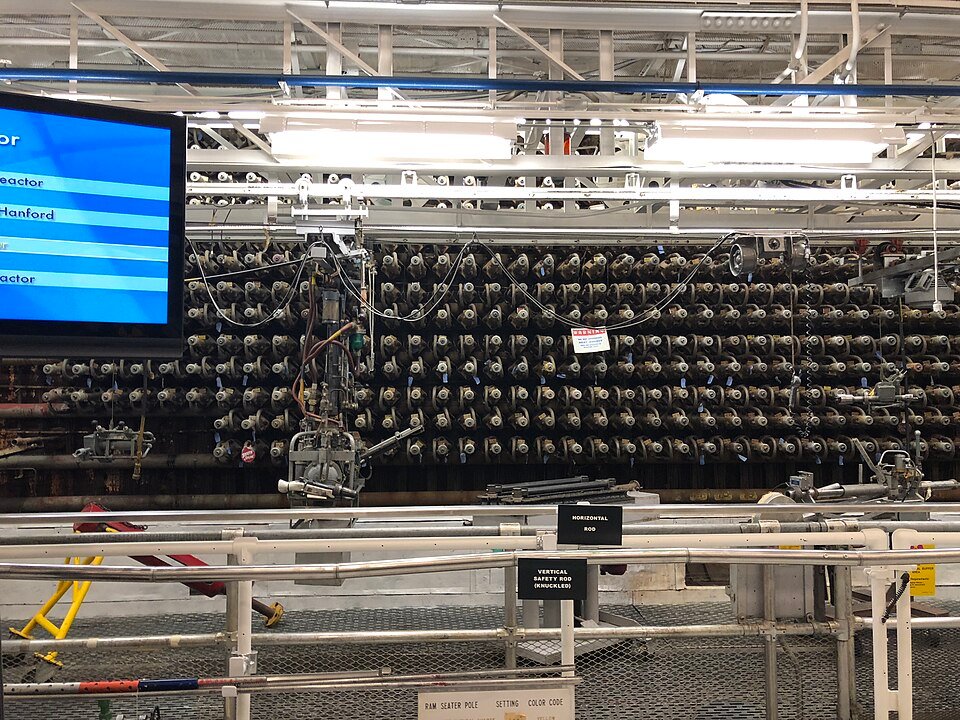
The core is a graphite box about 36 feet tall and 28 by 36 feet across, pierced from end to end by 2,004 aluminum tubes that held the uranium fuel. A cast-iron thermal shield 8 to 10 inches thick surrounded it, and cooling water from the Columbia River was pumped through the tubes, held in settling basins and then returned to the river.
From wartime secret to museum piece.
The reactor first went critical on September 26, 1944. Early operation stalled because a fission product, xenon-135, absorbed neutrons; adding more uranium solved it. The D and F reactors followed at Hanford in December 1944 and February 1945. Plutonium made here went into the Trinity test device and the bomb dropped on Nagasaki, and the site kept producing material through the Cold War.
B Reactor ran for two decades and was shut down for good in February 1968. It was listed on the National Register of Historic Places in 1992 and named a National Historic Landmark in 2008. A law passed in December 2014 made it part of Manhattan Project National Historical Park, formally established in 2015, along with sites at Oak Ridge and Los Alamos. Most of Hanford's other reactors have been sealed in a process called cocooning, while B was kept for its historical value.
Inside and outside the reactor.

Practical notes.
Before you go.
Can you visit the B Reactor?
Yes, but only on authorized, guided tours. The Department of Energy has run public tours on set dates in spring, summer and fall, by advance reservation. Check the official pages for current availability.
Why is the B Reactor important?
It was the first large-scale nuclear reactor, the first to use water cooling and the first to face xenon poisoning. Its plutonium was used in the Trinity test and in the bomb dropped on Nagasaki.
Is the B Reactor still in use?
No. It was shut down permanently in February 1968 and is preserved as a historic site, unlike most other Hanford reactors, which were sealed up.
Is it a national park?
It is part of Manhattan Project National Historical Park, formally established in 2015 through an agreement between the National Park Service and the Department of Energy. The park also includes sites in Oak Ridge, Tennessee, and Los Alamos, New Mexico.
Around Washington State
Walking tours, day trips and experiences around this area, on GetYourGuide.