Hidden · Fairmount, Philadelphia, United States
Eastern State Penitentiary
A neo-Gothic prison in Fairmount, opened in 1829 to make inmates reflect in silence, and later copied by more than 300 prisons around the world.
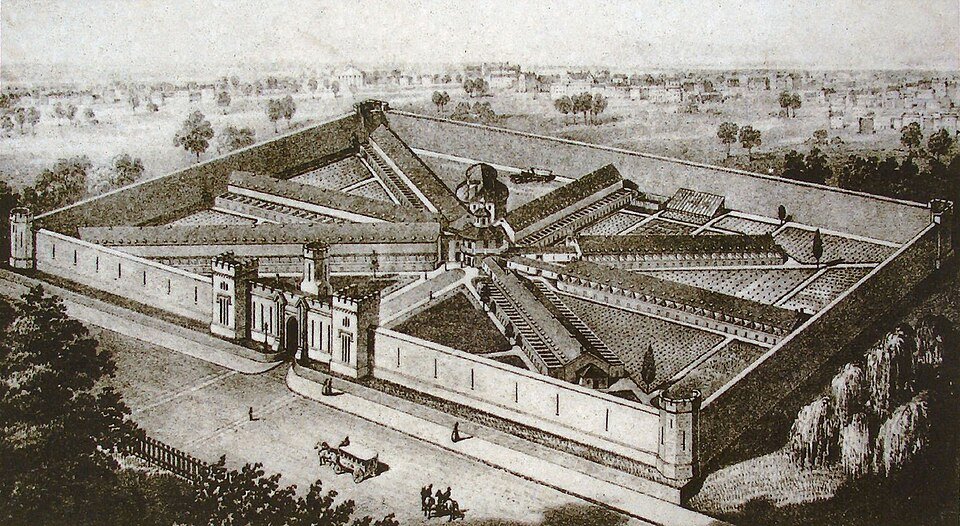
A prison designed to make people think about what they had done.
Eastern State Penitentiary stands in the Fairmount section of Philadelphia on an eleven-acre site known as Cherry Hill, which Pennsylvania bought in 1821. Building began in 1822 to a design by the British-born architect John Haviland, and it opened on October 25, 1829. At the time it was the largest and most expensive public structure in the United States.
The idea behind it, called the Pennsylvania or separate system, was that prisoners kept alone with their thoughts would become penitent and change. The first plan had seven corridors of heated, skylit cells radiating from a central hub like the spokes of a wheel, for about 500 people in isolation. The warden had to visit every inmate each day. Haviland gave the building a neo-Gothic look meant to intimidate, with halls designed to feel like a church.
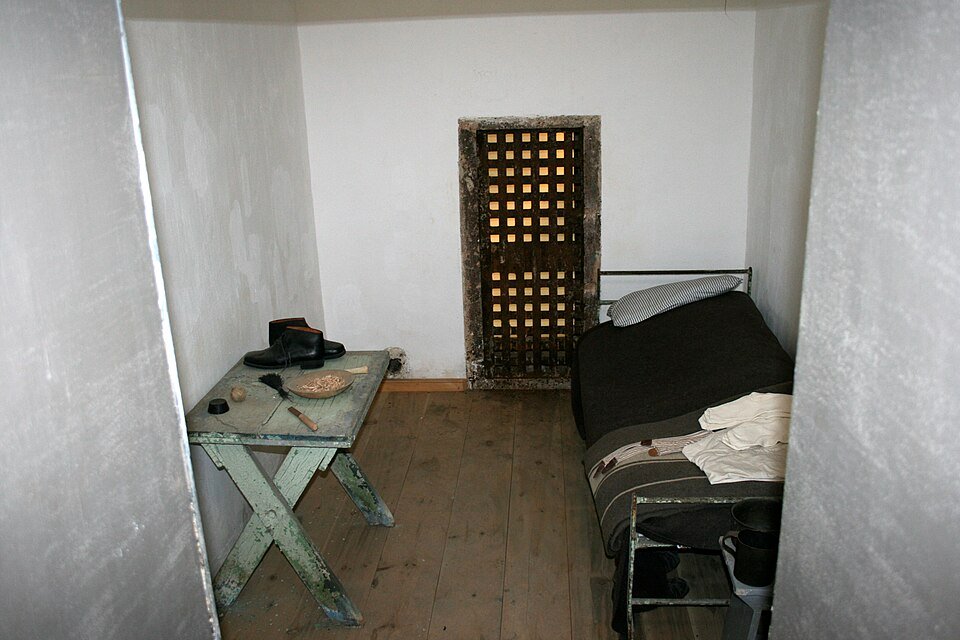
Each cell had a single skylight, nicknamed the “Eye of God,” and a private exercise yard with high walls so inmates could not talk. Cells also had running water, a flush toilet and pipes that carried hot water for heating. Some prisoners gardened or kept pets in their yards, and a hood was placed over an inmate’s head whenever he left his cell so others could not recognize him. The plan was copied by more than 300 prisons around the world.
From solitude to overcrowding, then to ruin and reuse.
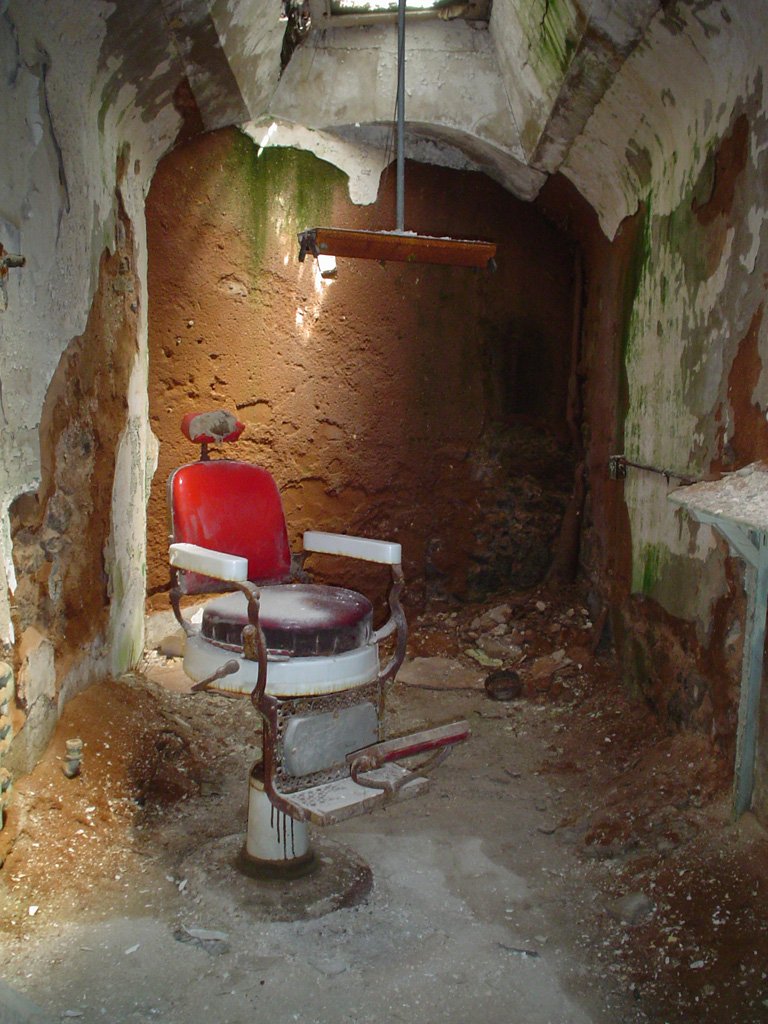
Overcrowding broke the system. By 1870 the prison held 671 inmates in 560 cells, new cell blocks were added in the 1870s, and by 1913 the solitary method was officially dropped. Behind the ideal were harsh punishments, from cold showers to an iron gag and a restraint chair. Beneath Cellblock 14 were small cells known as “the hole,” where former inmates recalled spending 10 to 30 days.
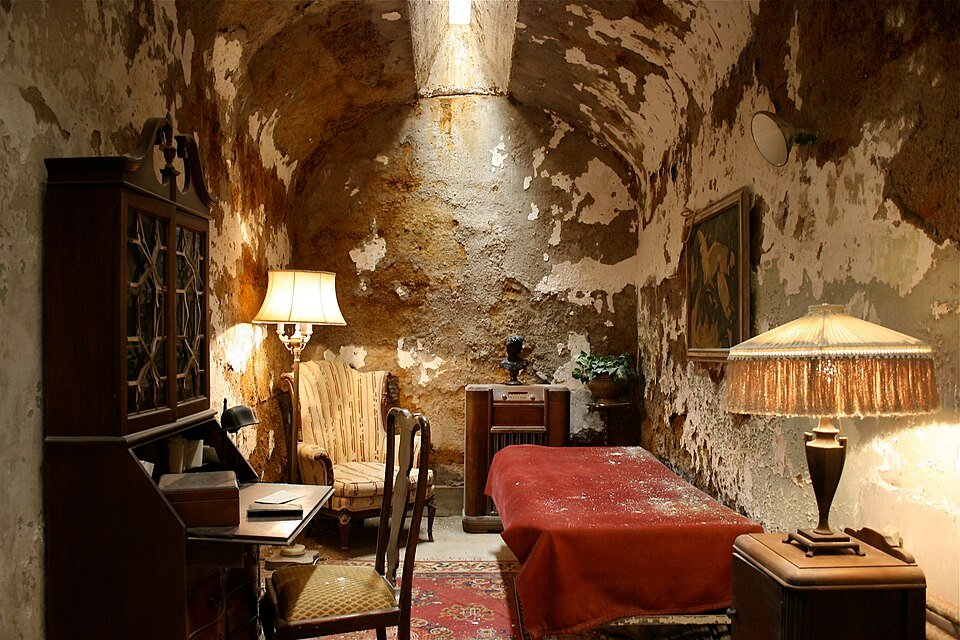
Famous inmates passed through, among them Al Capone in 1929 and the bank robber Willie Sutton. In 1945 twelve inmates, Sutton among them, escaped through a 97-foot tunnel they had dug for a year under the wall, and 30 other unfinished tunnels were found during renovations in the 1930s. A dog named Pep was reportedly given a life sentence in 1924 and assigned an inmate number.
Cellblock 15, built in 1956 and known as Death Row, was the last major addition; executions were not carried out at Eastern State. A major riot hit in 1961, and the prison was named a National Historic Landmark in 1965. It closed as a state prison in 1970 and was briefly used for city inmates in 1971. Trees grew inside the cell blocks and stray cats moved in. Plans for condominiums and a mall were halted in 1988, and in 1994 the site opened to the public for history tours.
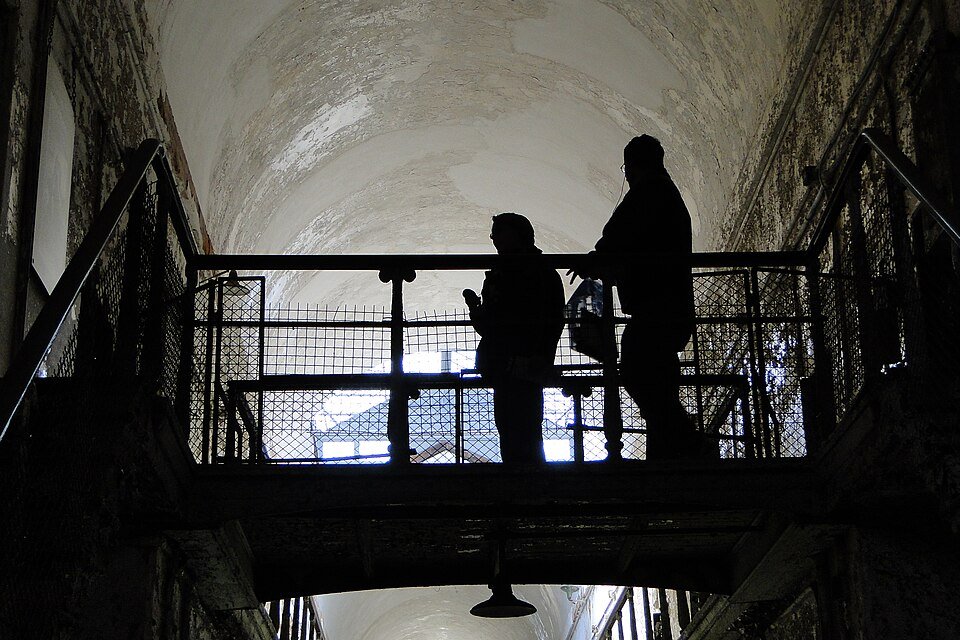
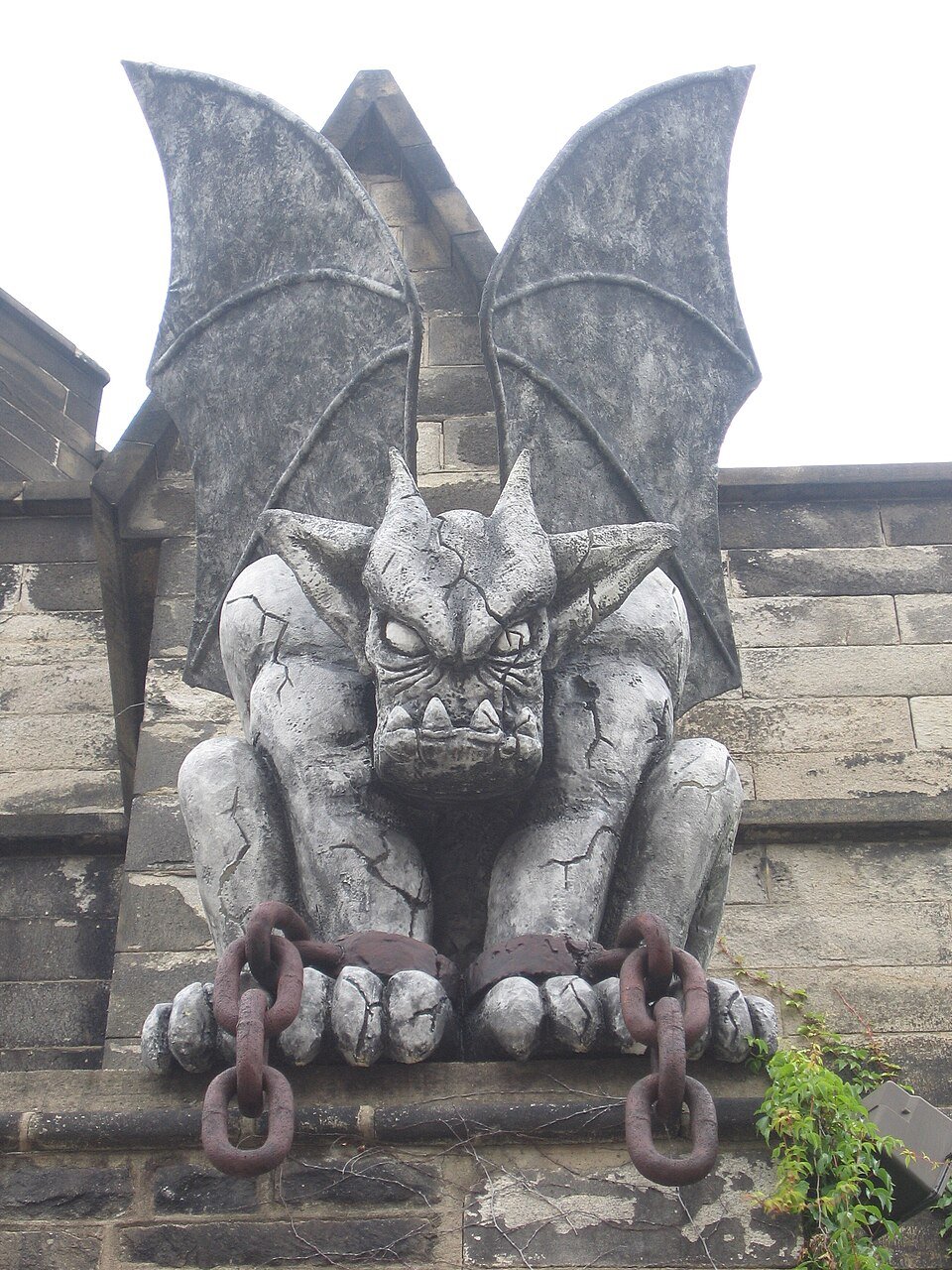
Cells and corridors.
Practical notes.
Before you go.
Why is Eastern State Penitentiary famous?
It is considered the world’s first true penitentiary, and its radial plan with solitary cells became the model for more than 300 prisons worldwide.
Who was held at Eastern State?
Inmates included Al Capone, held in 1929, and the bank robber Willie Sutton, who escaped through a tunnel in 1945. Early prisoners were mostly petty criminals, and the first-time offenders often served two years.
Were executions carried out at Eastern State?
No. Cellblock 15, known as Death Row, housed prisoners sentenced to death, but executions were not carried out at the prison.
Can you visit Eastern State Penitentiary?
Yes. The former prison, a National Historic Landmark, offers self-guided audio tours, guide-led tours and other programs. Check the official website for current schedules.
Around Philadelphia
Walking tours, day trips and experiences around this area, on GetYourGuide.