Hidden · Mitchell, Oregon, United States
Painted Hills
Hills striped in red, tan, yellow and black, a record of climates that shifted between 34 and 28 million years ago.
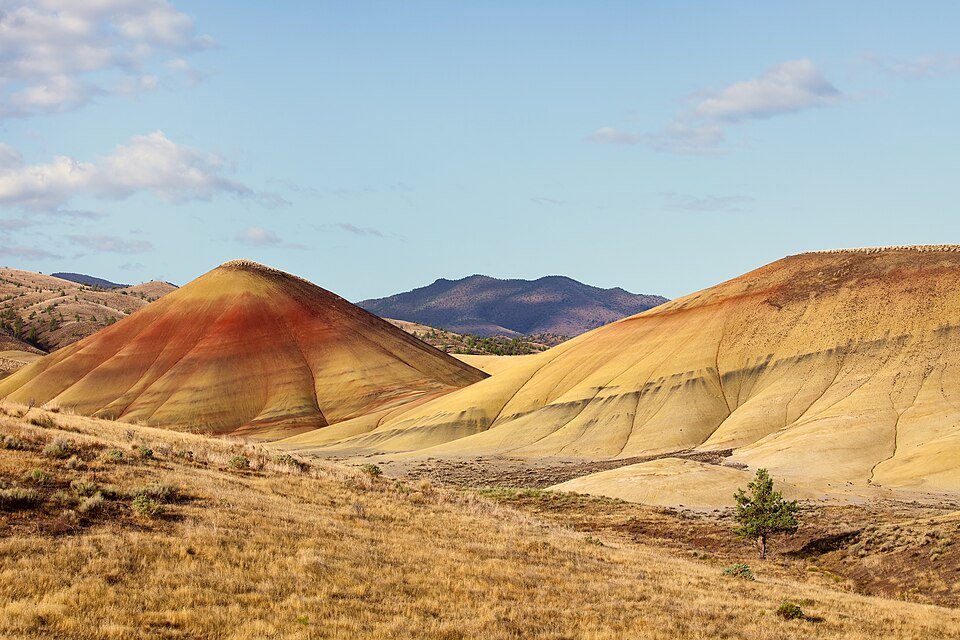
Hills that change color with the weather.
The Painted Hills are a geologic site in Wheeler County, Oregon, about 9 miles northwest of Mitchell. They form one of the three units of John Day Fossil Beds National Monument, along with Sheep Rock and Clarno, and cover 3,132 acres. They are listed as one of the Seven Wonders of Oregon.
The colors change with the weather. When the hills are wet, light reflects differently and the shades vary in brightness and hue, so the same slope can look different from one day to the next. The site has several well-marked trails.
Ash, floodplains and a cooling climate.
The hills began to form 35 million years ago, when pumice and ash from volcanic eruptions in the Cascade Mountains traveled about 100 miles east and settled over the area. Water, plants and animals mixed the ash with other sediments. Buried under new layers, it turned into soil by compaction and cementation, and weathering wore the surface into clay. Today the hills are mostly hard claystone.
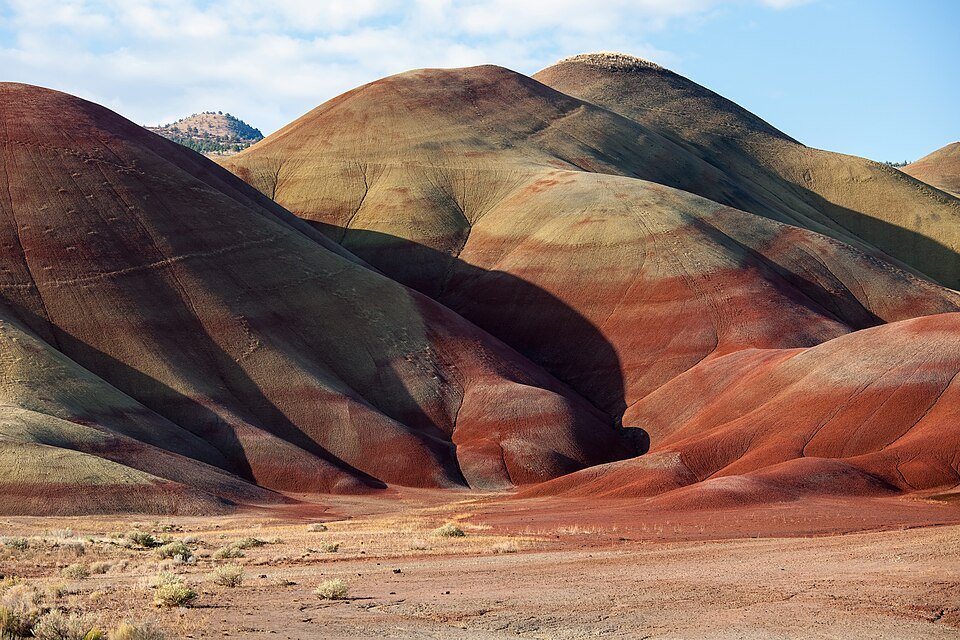
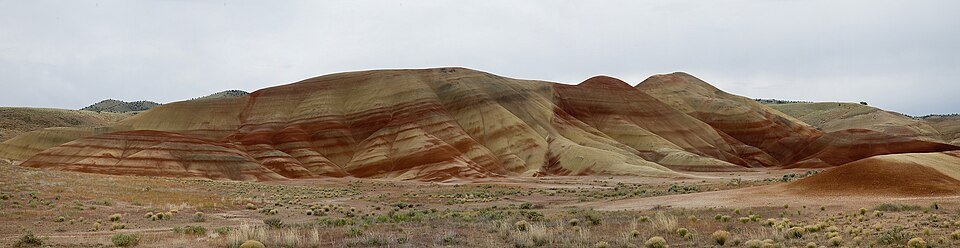
The stripes record a climate in transition. Between 34 and 28 million years ago the mild, humid Eocene gave way to the cooler, drier Oligocene. Red layers come from floodplain soils of the tropical periods, rich in iron oxide. Yellow layers come from drier, cooler times. Black layers are lignite, once plant matter along the floodplain, and black marks on the hills come from manganese oxide.
Fossils are rare here, because the ash arrived irregularly and most organic matter decayed. Leaf impressions from ancient lake beds can still be found, showing plants such as redwood, cinnamon, fig and alder. The larger Painted Hills unit also holds many remains of early horses, camels and rhinoceroses, which makes it important to paleontologists.
Stripes of color across the hills.
Practical notes.
Before you go.
Why are the Painted Hills different colors?
The colors come from minerals in volcanic ash and from layers laid down as the climate shifted. Iron oxide gives the red, drier times gave yellow, lignite gives black, and manganese oxide makes black marks.
How old are the Painted Hills?
They began to form 35 million years ago, when volcanic ash from the Cascades settled over the area. The stripes record climate changes between 34 and 28 million years ago.
Are there fossils at the Painted Hills?
Fossils are rare, but leaf impressions from ancient lake beds can be found. The larger unit has many remains of early horses, camels and rhinoceroses.
Can you walk around the Painted Hills?
Yes, there are several well-marked trails. Visitors should stay on them, because stepping off can damage the mineral layers. Check the official website for current conditions.
Around Oregon
Walking tours, day trips and experiences around this area, on GetYourGuide.