Hidden · Rocky Hill, Connecticut, United States
Dinosaur State Park
A geodesic dome in Rocky Hill, Connecticut, covers hundreds of dinosaur footprints left in sandstone about 200 million years ago.
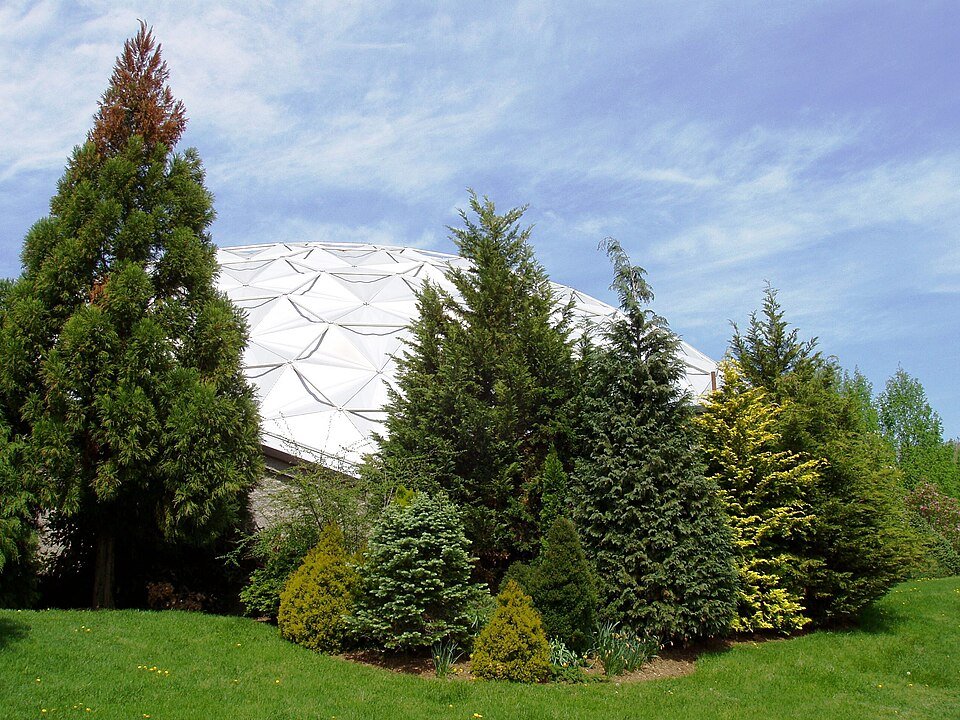
Footprints found by a bulldozer operator.
Dinosaur State Park and Arboretum is a state-owned natural history preserve of 80 acres in Rocky Hill, Connecticut. It protects one of the largest dinosaur track sites in North America, fossil trackways embedded in sandstone from the start of the Jurassic period, about 200 million years ago. The Connecticut Department of Energy and Environmental Protection manages it.
The tracks came to light in 1966, when a bulldozer operator noticed them while excavating the site for a new state office building. They added to a long record of fossil finds in the Connecticut Valley going back to the 19th century. The site opened as a state park in 1968, the same year its 7-acre trackway was registered as a National Landmark.
A dome over 500 tracks, and an arboretum of ancient plant families.
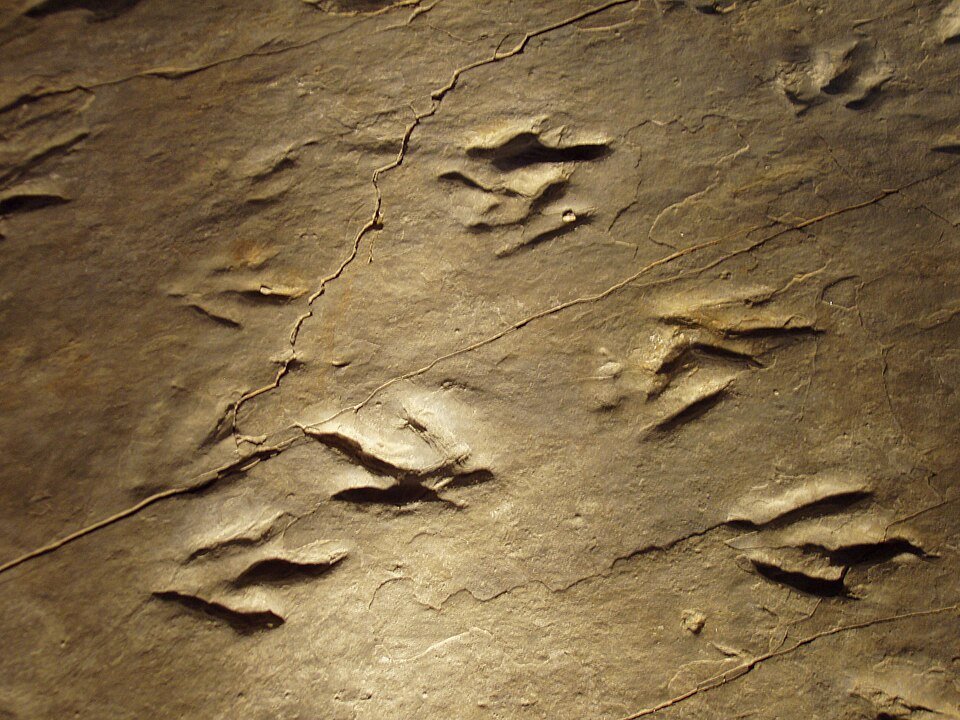
A geodesic dome of 55,000 square feet covers some 500 tracks, while about 1,500 more stay buried to preserve them. The sandstone belongs to the East Berlin Formation, a sandy lakeshore of the Early Jurassic, recorded in the rock. The largest and most common prints are called Eubrontes, a name given by geologist Edward Hitchcock, and were probably left by a meat-eating theropod similar to Dilophosaurus. They measure 10 to 16 inches long and are spaced 3.5 to 4.5 feet apart.
Inside the dome are life-sized dioramas of Triassic and Jurassic plants and animals, interactive displays, an exhibit on how the tracks were uncovered and rock slabs with other Connecticut Valley tracks, including large four-toed Otozoum prints with skin impressions. The arboretum has 2 miles of trails among some 250 species and cultivars of conifers, plus ginkgo, magnolia and sequoia, part of an effort to grow representatives of Mesozoic plant families. The park also offers films, guided walks and lectures.
The dome and the park.
Practical notes.
Before you go.
How old are the dinosaur tracks?
About 200 million years. They were left on a sandy lakeshore at the start of the Jurassic period and are preserved in sandstone.
Who found them?
A bulldozer operator noticed the tracks in 1966 while excavating the site for a new state office building. The park opened in 1968.
How many footprints can you see?
About 500 tracks are enclosed under the dome, while another 1,500 remain buried to protect them.
What made the biggest prints?
The largest and most common prints are called Eubrontes. They were probably made by a meat-eating theropod similar to Dilophosaurus.
Around Connecticut
Walking tours, day trips and experiences around this area, on GetYourGuide.