Hidden · Margate City, Atlantic City, United States
Lucy the Elephant
A six-story elephant of wood and tin, built to sell real estate, that survived a demolition order and now takes visitors up to the howdah on her back.
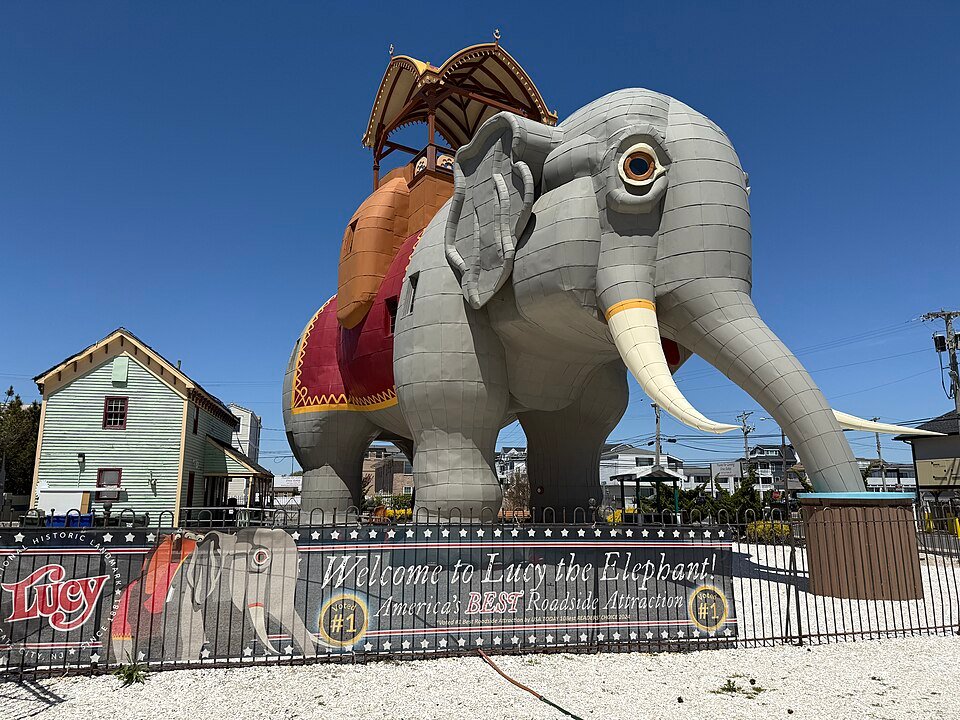
A building shaped like an elephant, made to sell land.
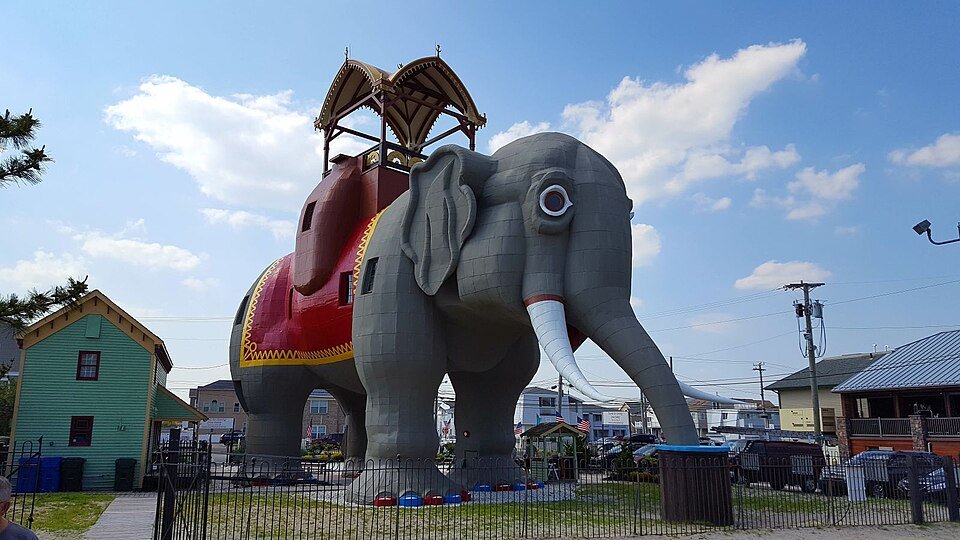
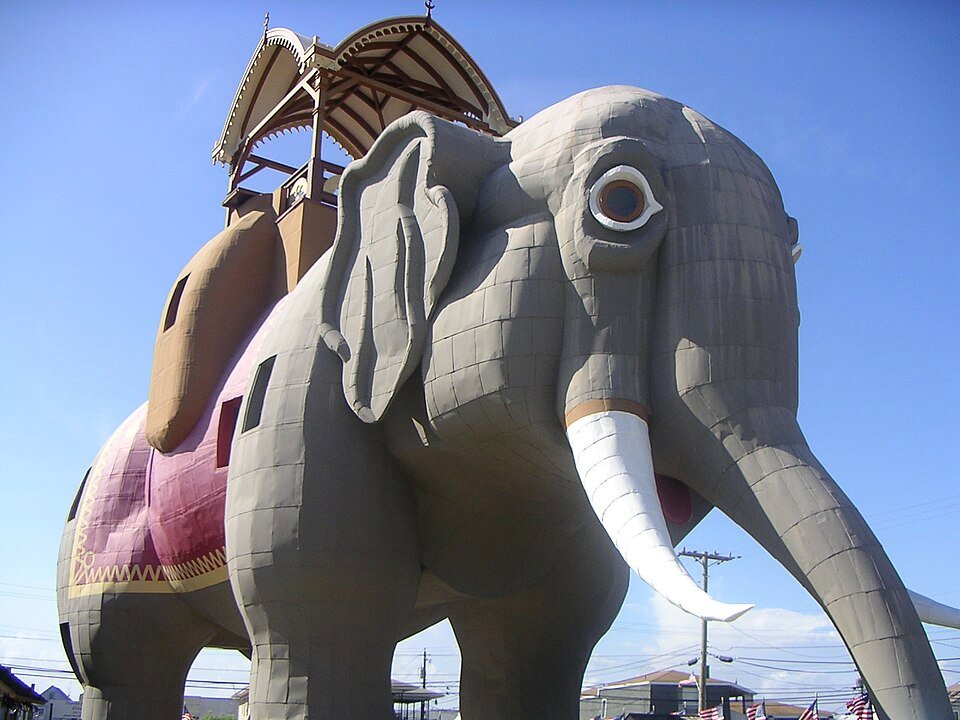
Lucy stands in Margate City, on the coast just south of Atlantic City. She is a six-story wood-frame building covered in tin, 65 feet tall, 60 feet long and about 90 tons, and she is the oldest surviving roadside tourist attraction in the United States.
James V. Lafferty built her in 1881 to promote real estate sales and draw visitors to what was then South Atlantic City. He patented the animal-shaped building in 1882 and hired two Philadelphia architects for the design, modeling the elephant on Jumbo, the star of the Barnum and Bailey circus. At first she was called Elephant Bazaar.
The numbers are part of the story: nearly a million pieces of wood, 200 kegs of nails, 4 tons of bolts and iron bars, 12,000 square feet of tin on the outside and 22 windows. Lafferty later built a second elephant on Coney Island and licensed the patent for one in Cape May.
From sales pitch to tavern to a rescue from the wrecking crew.
Lafferty took prospective buyers up to the howdah, the carriage on her back, to look over the land. A Philadelphia family bought her in 1887 and kept her until 1970, and one of its members is said to have named her Lucy in 1902. Through the first half of the 20th century she worked as a restaurant, an office, a cottage and a tavern, until Prohibition closed the tavern.
By the 1960s she was in disrepair and scheduled for demolition. Local volunteers, who became the Save Lucy Committee, were given 30 days to move her or pay for the demolition. Fundraising, above all a door-to-door campaign, saved her. On July 20, 1970 she was moved about 100 yards to a city-owned lot in roughly seven hours, and after repairs that added new steel to support her wooden frame and a new howdah she reopened in 1974.
She joined the National Register of Historic Places in 1971 and became a National Historic Landmark in 1976. Lightning blackened the tips of her tusks in 2006, and when Hurricane Sandy hit in 2012 the surge reached her toes but left her undamaged. A 2021 inspection found more than half of her metal skin beyond repair; she closed for the restoration in September 2021 and reopened on December 28, 2022.
Lucy, then and now.
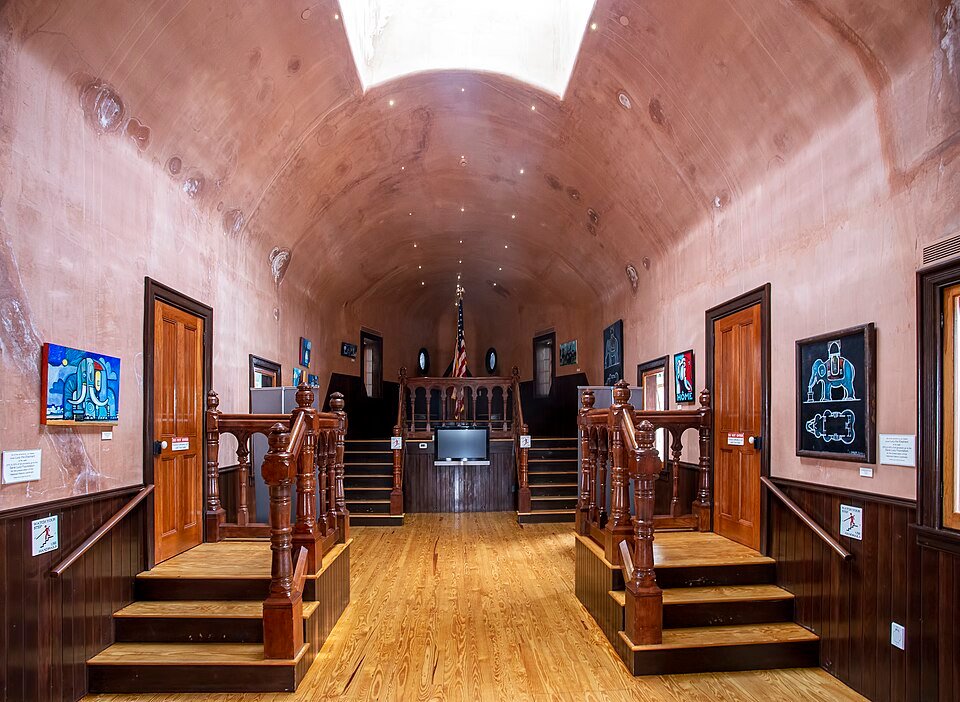
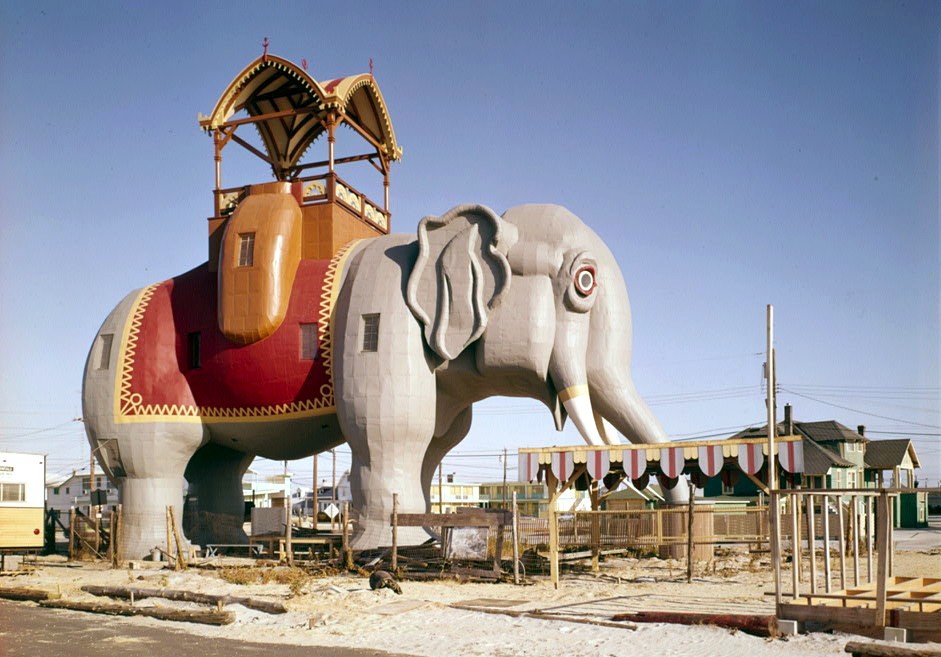
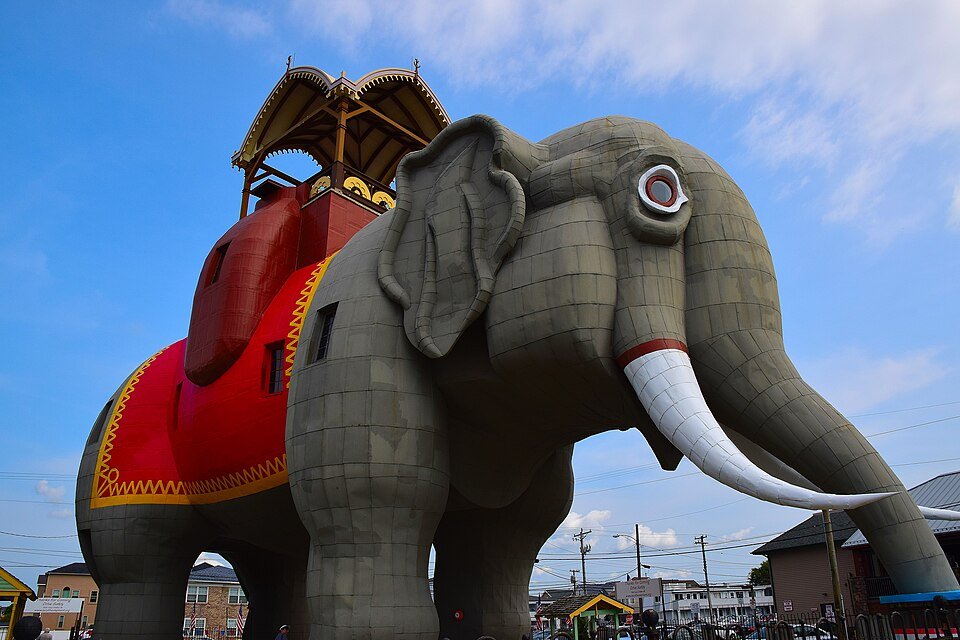
Practical notes.
Before you go.
Can you go inside Lucy the Elephant?
Yes, through guided tours, which include the howdah on her back as an observation deck. Schedules change, so check the official site before you go.
Who built Lucy and why?
James V. Lafferty built her in 1881 to promote real estate sales and attract tourists. He patented the animal-shaped building in 1882.
Was Lucy always in the same place?
No. On July 20, 1970 she was moved about 100 yards to a city-owned lot, a trip that took about seven hours, after volunteers raised money to save her from demolition.
Have you seen Lucy in movies or on TV?
Possibly. She appears in the opening of the 1980 film Atlantic City, on a postcard in the credits of National Lampoon’s Vacation, and in episodes of several TV series, including Boardwalk Empire.
Around Atlantic City
Walking tours, day trips and experiences around this area, on GetYourGuide.