
2.5 Hour Atlanta Local Food + Victorian Cemetery Tour
4.9 ★ · 714 reviews · 3 h
Includes a Victorian cemetery
$95.00per personSee this experience
Hidden · Atlanta, United States
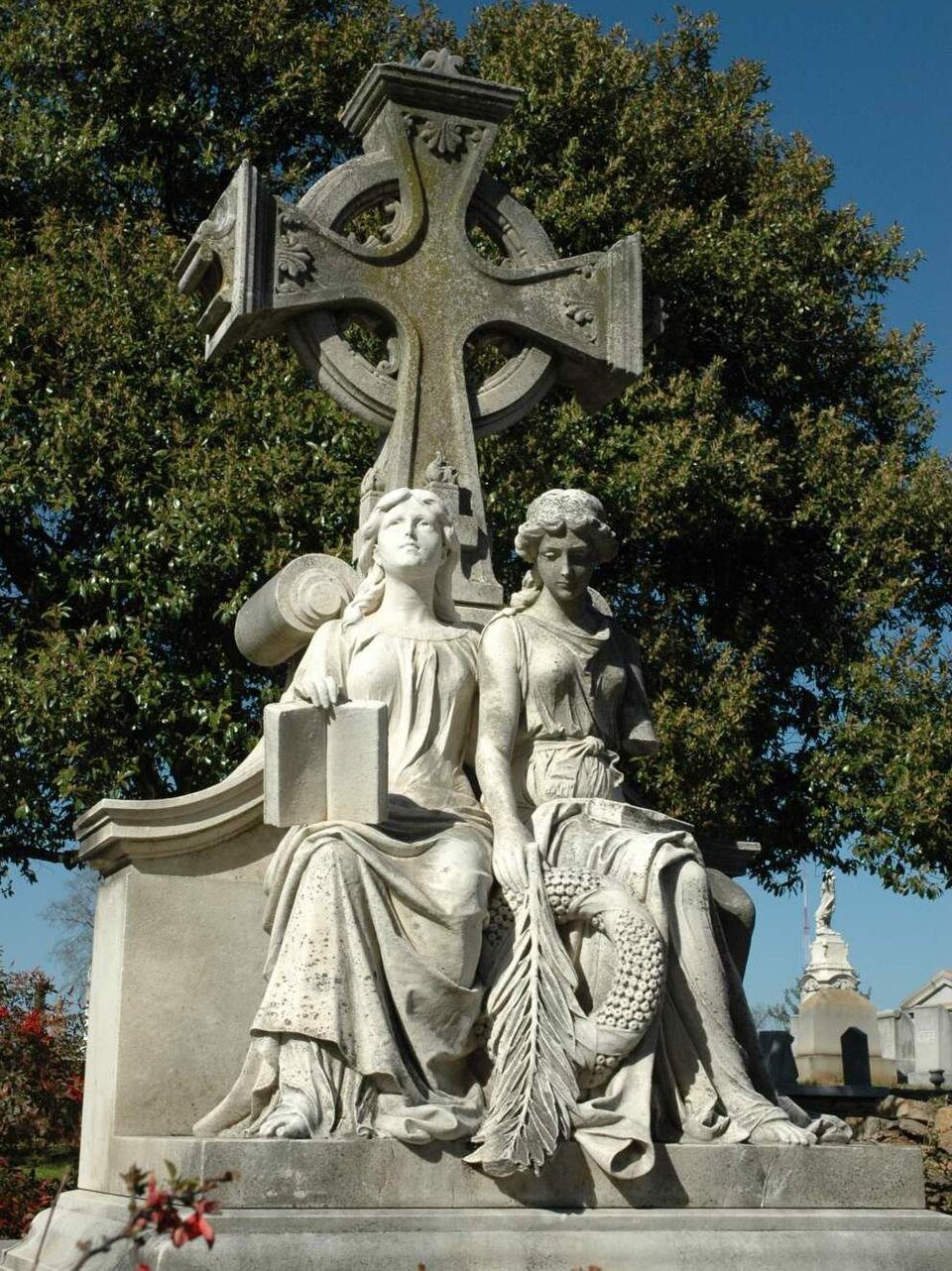
A Victorian garden cemetery that was once on the edge of Atlanta and now sits in the middle of it, with the city's history laid out grave by grave.
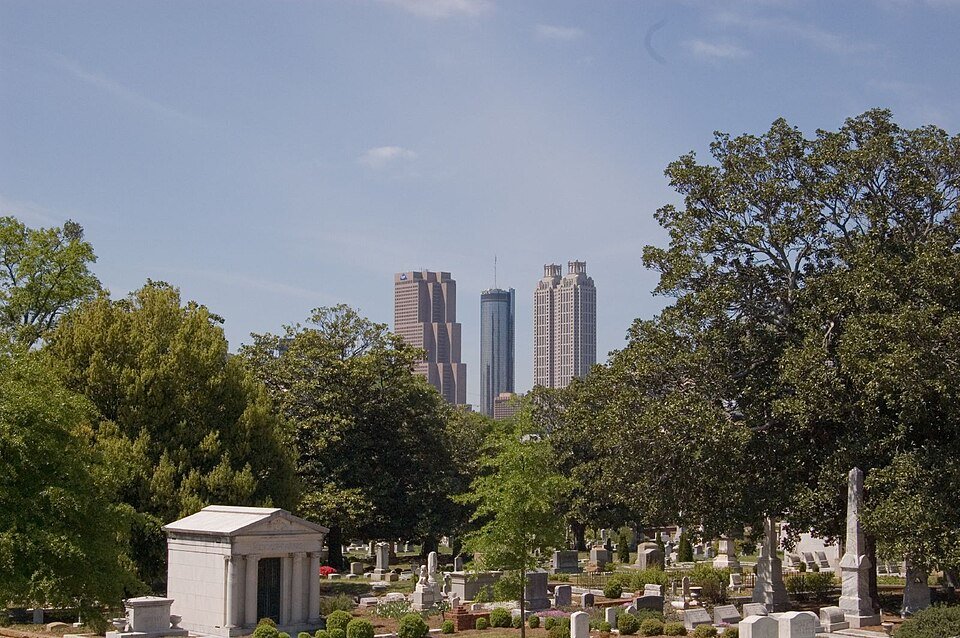
Oakland began in 1850 as Atlanta Cemetery, on six acres southeast of town. In 1872 it was renamed for the many oak and magnolia trees growing there, and by then it had grown to its present 48 acres. Atlanta kept expanding, so the cemetery now lies in the center of the city.
It is a good example of the Victorian garden cemetery, a style that Mount Auburn Cemetery in Massachusetts helped set in motion. The original six acres are among the oldest historic plots of land in Atlanta, because most of the rest of the city burned in 1864. The gates and perimeter walls came later, in 1896.
An estimated 70,000 people are buried here. The last regular plots were sold in 1884, yet burials still take place, mostly on family-owned plots or ground owned by the city. You will also notice how little ironwork there is for a cemetery of this age: Atlanta gave much of the original ironwork to the U.S. government to make arms in World War I.
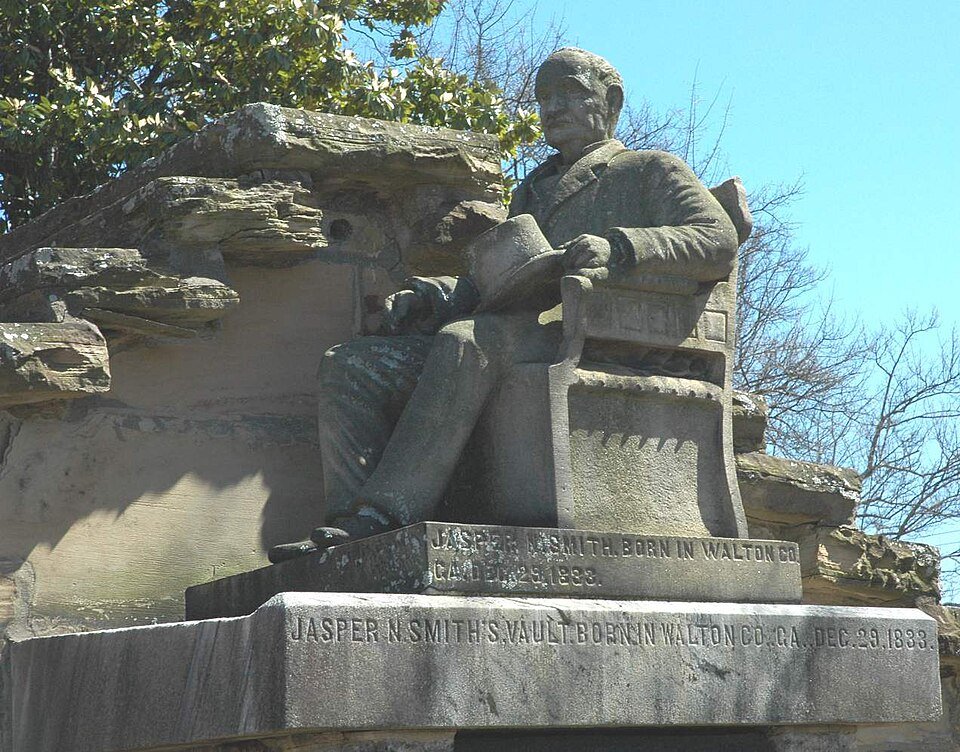
In the original six acres, the first resident was Dr. James Nissen, a visiting physician who died in 1850. Legend says he feared being buried alive and left instructions to make sure he would not wake underground. His headstone has almost worn away, and the inscription is known only from a survey of Atlanta cemeteries made in the 1930s. Nearby are the mausoleum of Jasper Newton Smith, topped by a life-size statue of himself, and the grave of golfer Bobby Jones, often covered in golf balls and ringed with the eighteen flowering plants that give the Augusta National holes their names.
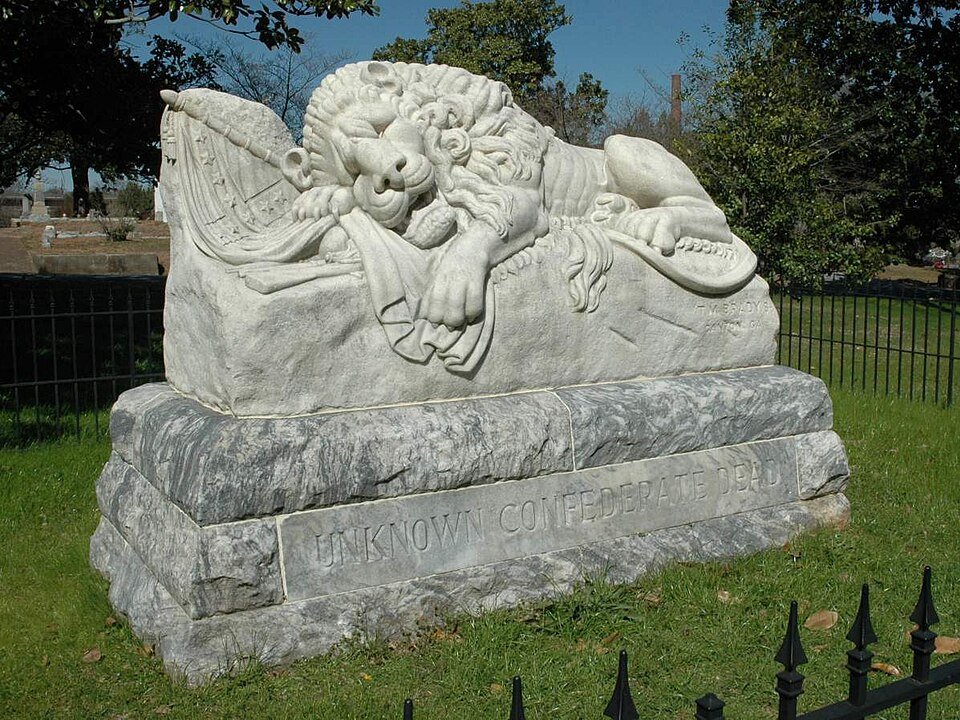
The Confederate section holds an estimated 6,900 burials, about 3,000 of them unknown. Many soldiers who died in the large military hospitals near the cemetery were buried here, and a few thousand were moved in after the war. A 65-foot granite obelisk, dedicated in 1874, marks the area, and 16 Union soldiers lie among the Confederate graves. The Lion of the Confederacy, a marble sculpture from 1894 that watched over unknown dead, was removed by the city in 2021 after repeated vandalism.
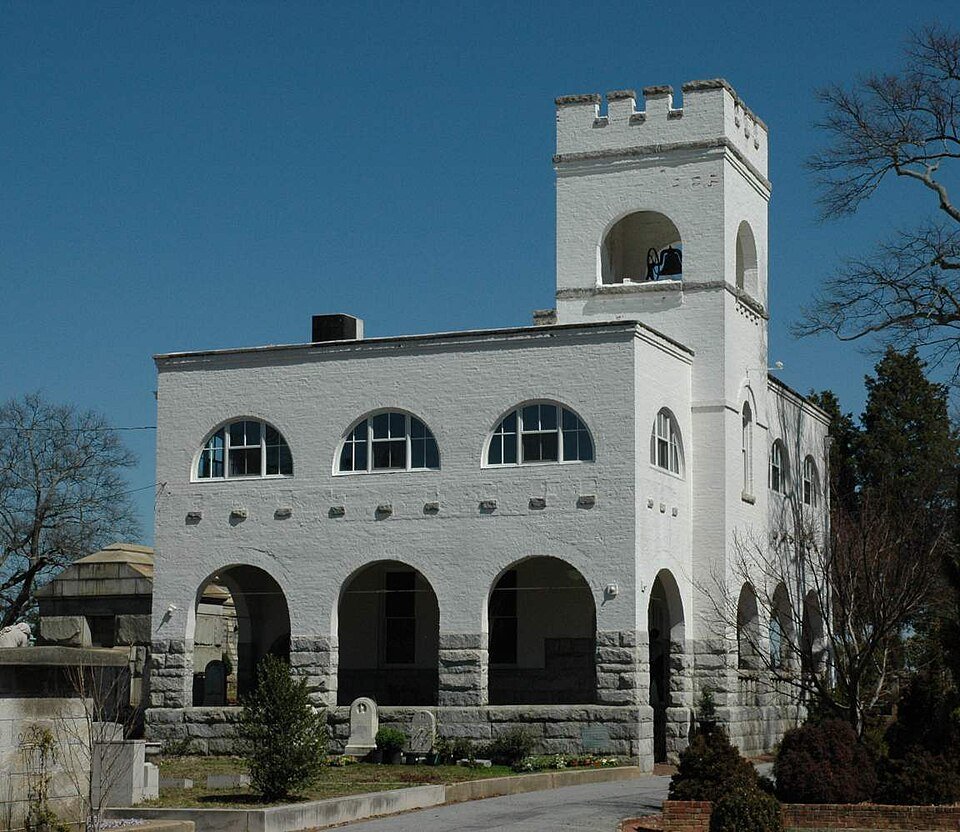
Other parts tell other stories. The old and new Jewish sections show how the community blended German-Jewish and American customs, while Eastern European members of another congregation kept more traditional markings. Potter's Field, where people who could not afford a plot were buried, held an estimated 17,000 people according to a 1978 survey. The Black section reflects segregation: many wooden markers have rotted away, so a large share of its graves are now unknown. The Bell Tower, built in 1899 on the site of a farmhouse where General Hood directed Confederate forces on July 22, 1864, is now the visitor center.
4.9 ★ · 714 reviews · 3 h
Sold by Viator. Prices and review counts checked on 09/09/2026. This tour mentions a Victorian cemetery in its title; check the tour page to confirm it stops at Oakland.
Yes. The last regular plots were sold in 1884, but burials continue on family-owned plots and on ground owned by the city of Atlanta.
Atlanta contributed much of the original ironwork to the U.S. government to make arms during World War I, so many graves no longer have their fences.
About 70,000 people, including Confederate and Union soldiers, golfer Bobby Jones, a former mayor, and thousands buried in Potter's Field and the Black section.
It was the sexton's office and living quarters, built in 1899. Restored in 1998, it now holds the visitor center and the offices of the Historic Oakland Foundation.
Walking tours, day trips and experiences around this area, on GetYourGuide.