
Capitol Hill, Supreme Court & Library of Congress Tour 12ppl Max
4.9 ★ · 216 reviews · 3 h
Covers Capitol Hill
$55.00per personSee this experience
Hidden · Capitol Hill, Washington, DC, United States
An active 1807 burial ground on Capitol Hill with rows of cenotaphs in sandstone painted white, kept alive today by volunteers.
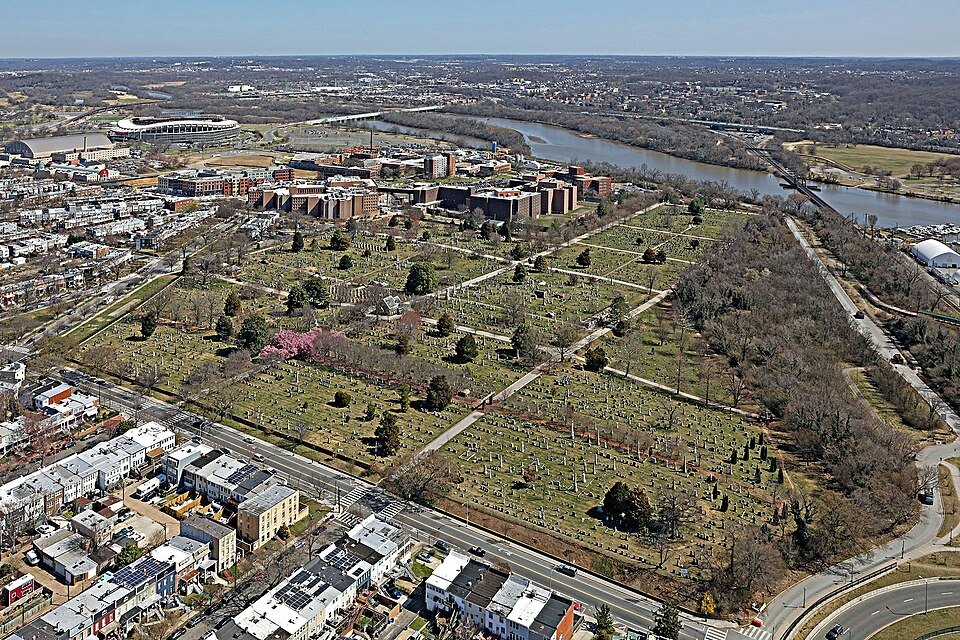
Congressional Cemetery, officially the Washington Parish Burial Ground, sits in the Hill East neighborhood of Washington, DC, on the west bank of the Anacostia River and about a mile and a half southeast of the Capitol. Private citizens connected to Christ Church founded it in 1807, and the church still owns it. More than 65,000 people are buried or memorialized here.
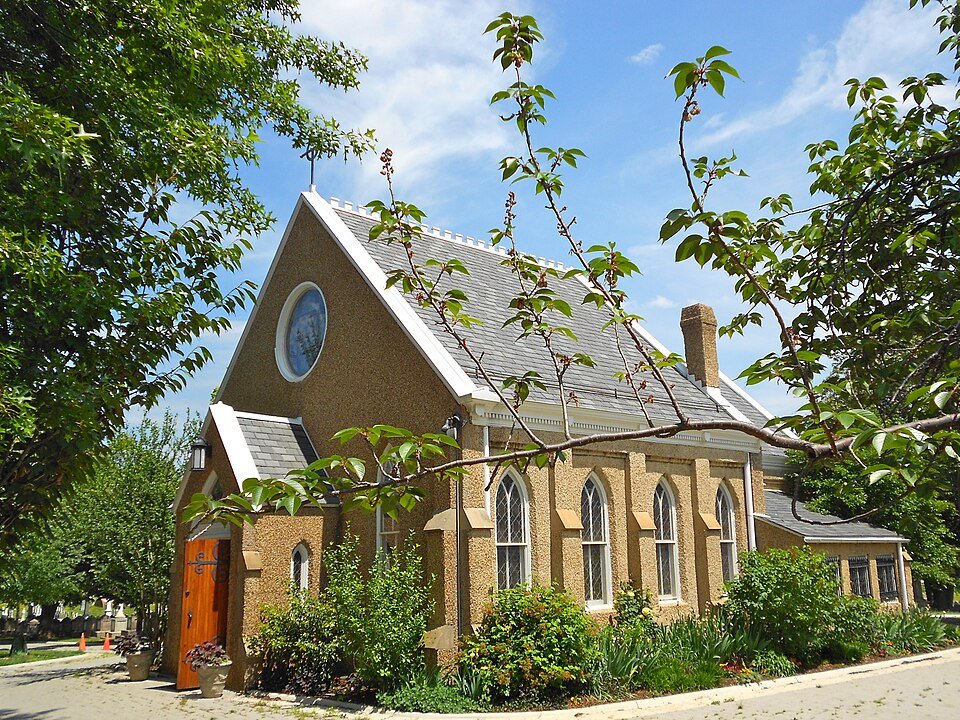
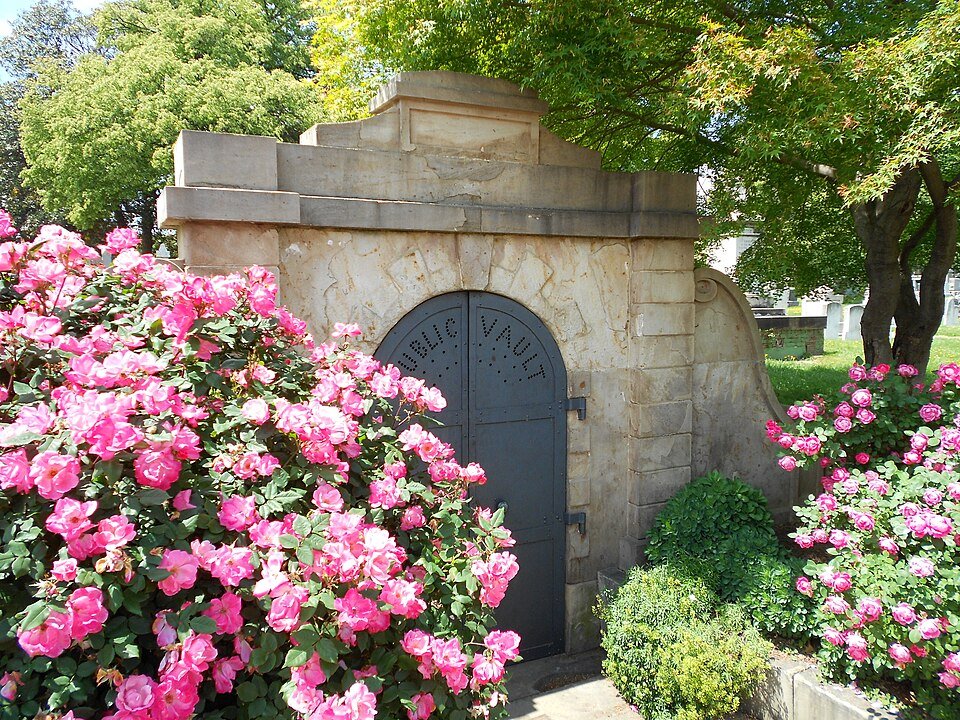
Its link to Congress is real but informal. From 1823 to 1876 Congress paid to expand and maintain it, funding a road from the Capitol, the public vault, fencing and a gatehouse, yet it never became a federal institution. The burials include members of Congress, builders and architects of early Washington, mayors, Native American diplomats, Civil War veterans and ordinary Washington families, as well as many slave traders and slave owners.
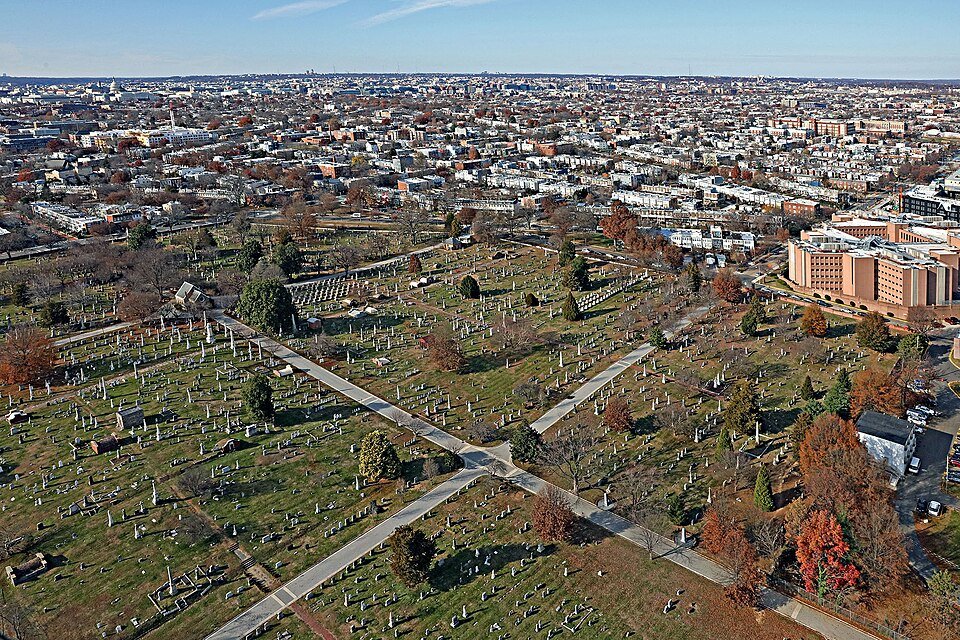
The graves were first laid out on a grid that extended the street plan of the city, and the grid survives. From the late 1840s the cemetery took on a more park-like look, following the rural cemetery movement.
The most striking feature is the field of cenotaphs believed to have been designed by Benjamin Latrobe: a square block with recessed panels on a wider plinth, topped by a cone. Of the 186 contributing objects in the historic district, 168 are these monuments. They are made of Aquia sandstone, like the White House and the Capitol, and were painted white. The word cenotaph here covers both monuments to people buried elsewhere and markers over occupied graves. They were discontinued in 1876, after a senator said he found them so unattractive that being buried under one added a new fear of death.
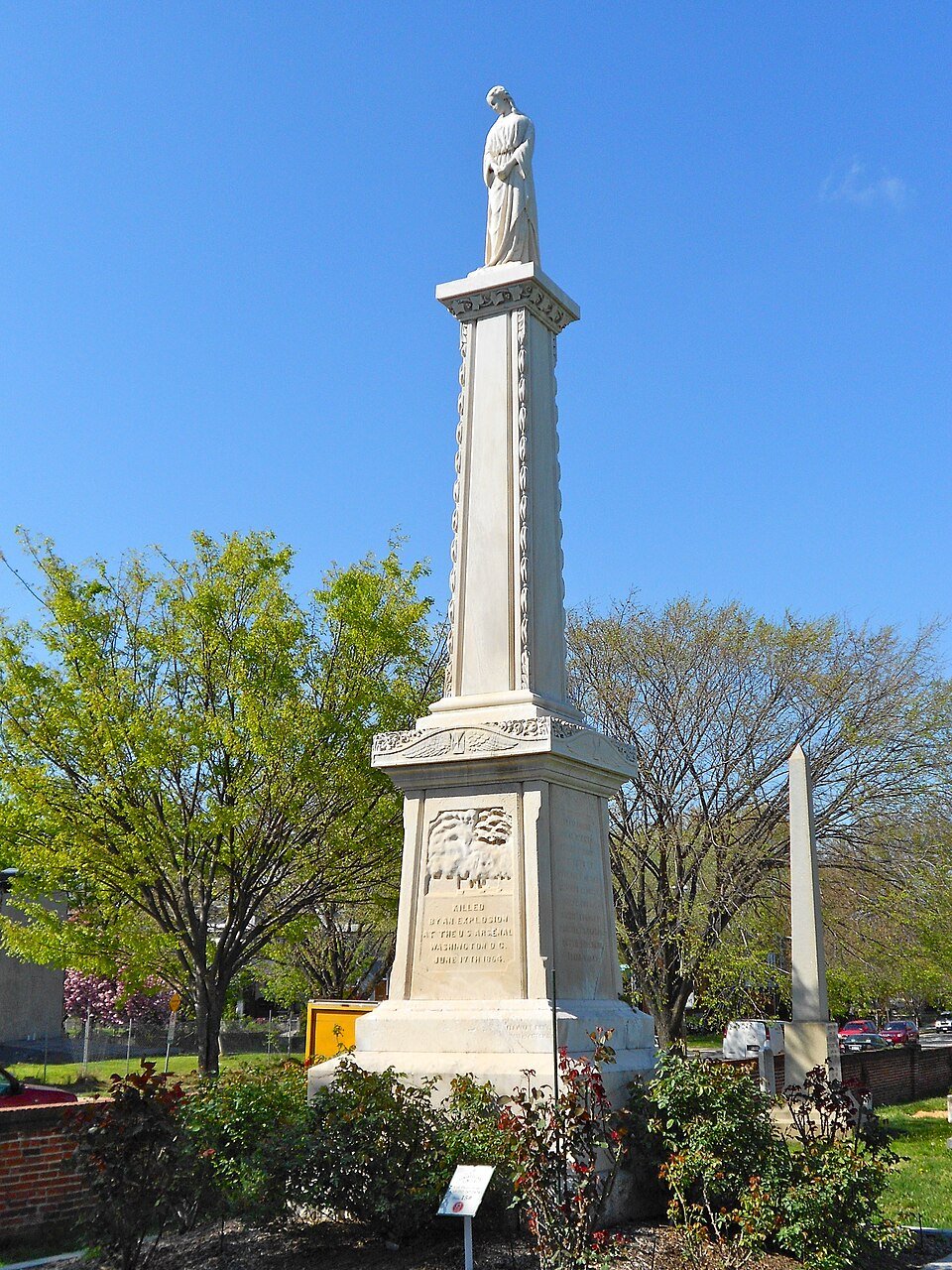
In 1864 an explosion at the nearby Washington Arsenal killed a woman supervisor and 20 teenage girls, most of them Irish, who packed cartridges. Lincoln led the funeral procession here, and a monument over the graves of 16 of the victims stands in the cemetery, topped by a sculpture of a grieving young woman on a marble column.
By the 1970s the cemetery was in serious trouble, with monuments and vaults in disrepair and almost no funding. Since 1976 it has been managed by the Association for the Preservation of Historic Congressional Cemetery, which now hosts over 1,000 volunteers a year. In 2013 the cemetery used goats to clear poison ivy and other plants, which drew press coverage around the world, and radar mapping of about half the cemetery found a potential 2,750 unmarked burial sites. It remains an active burial ground.
4.9 ★ · 216 reviews · 3 h

5.0 ★ · 13 reviews · 2 h
Sold by Viator. Prices and review counts checked on 09/09/2026. These tours cover Capitol Hill; they do not stop at Congressional Cemetery.
Its official name is Washington Parish Burial Ground, but sites were set aside there for legislators and officials, and from 1823 to 1876 Congress funded its expansion and upkeep, as well as cenotaphs for members of Congress.
More than 65,000 people. They include one vice president, one Supreme Court justice, six Cabinet members, nineteen senators, 71 representatives, veterans of every American war, early builders of Washington and many local families.
A monument to someone buried elsewhere. At this cemetery the word also covers the Latrobe-style monuments that mark occupied graves of senators and representatives.
Yes. It is an active historic cemetery in Washington, DC. Hours and guided tours change, so check the official website, and respect the graves and services.
Walking tours, day trips and experiences around this area, on GetYourGuide.