Hidden · Royal, Nebraska, United States
Ashfall Fossil Beds
A waterhole where animals died under volcanic ash about 12 million years ago, leaving rhinos, horses and camels preserved with their bones still in place.
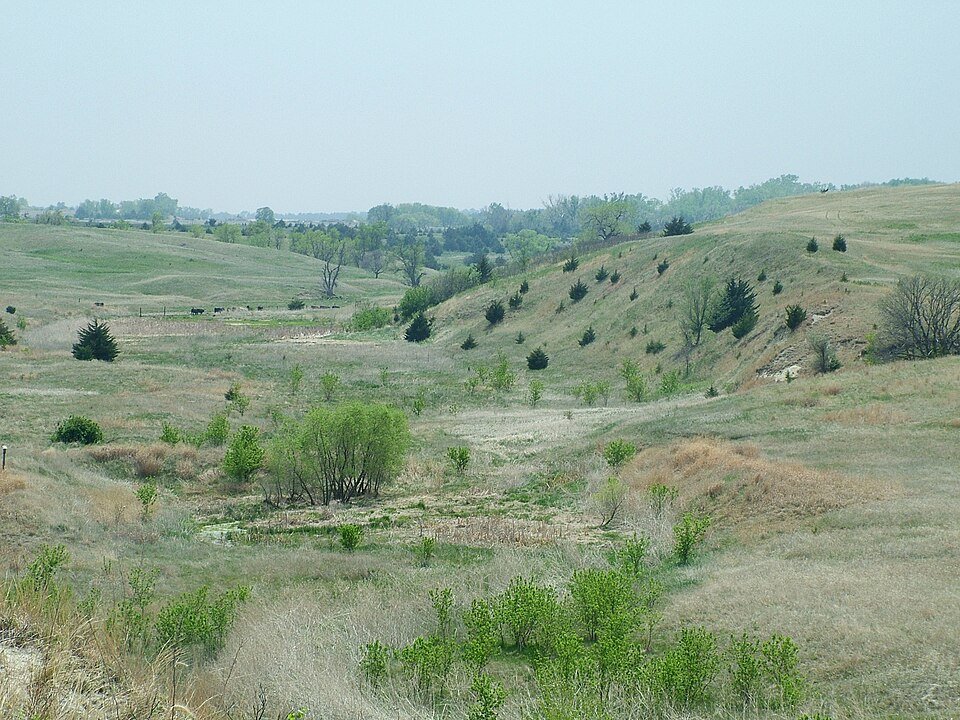
A snapshot of a Miocene waterhole.
The Ashfall Fossil Beds lie in Antelope County in northeastern Nebraska, near Royal. They are a rare kind of fossil site, called a lagerstätte, where unusual conditions preserved a whole group of organisms at once. Ash from a supervolcano eruption in present-day Idaho, nearly 1,000 miles to the west, drifted downwind and fell here some 12 million years ago. Elsewhere the ash lay up to a foot deep, but in the dip of a watering hole it piled up 8 to 10 feet.
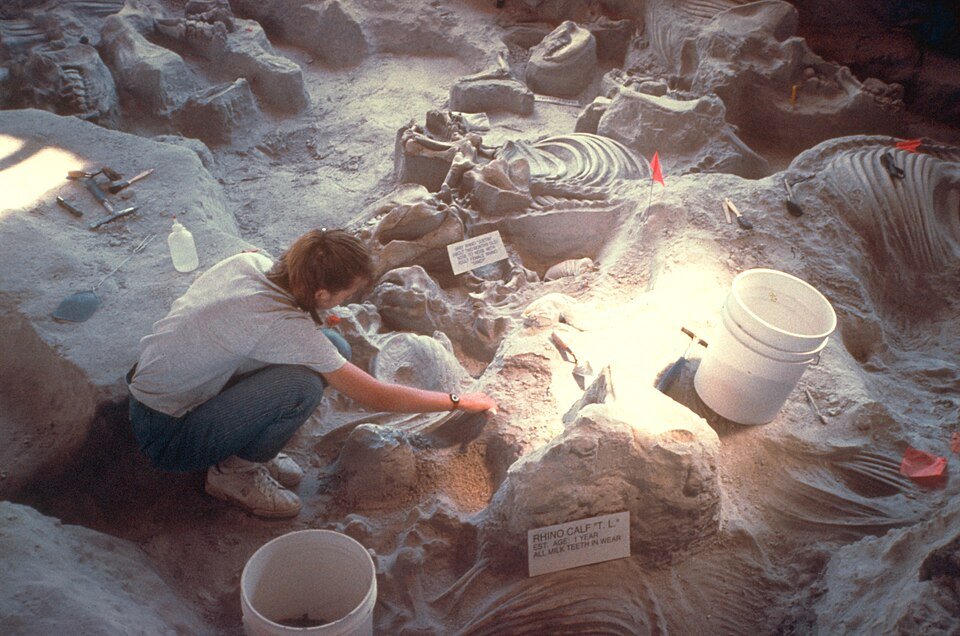
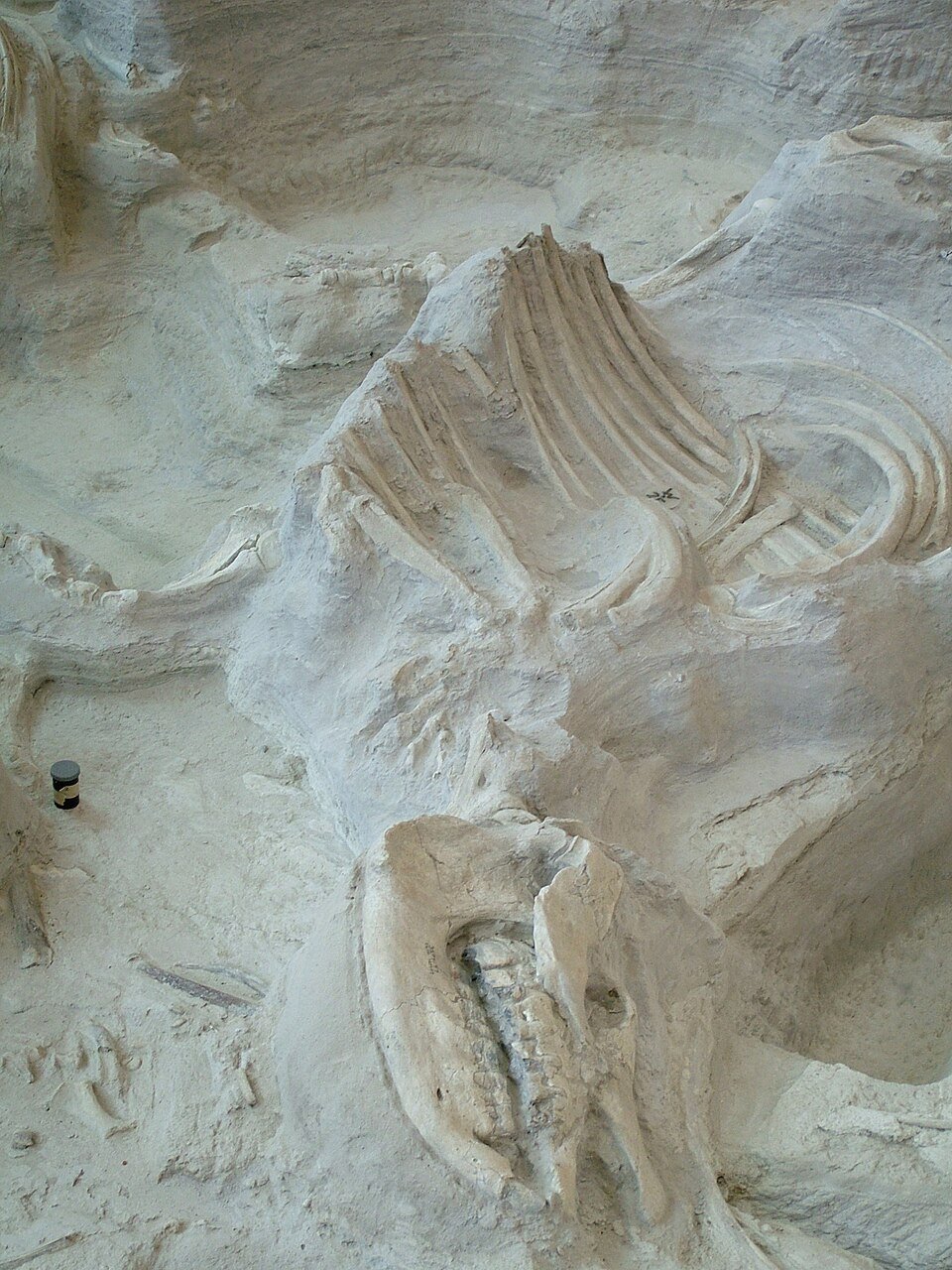
Animals had come to the waterhole and died there. Their bones show lung failure from breathing the ash, and the smaller animals died first. The ash stayed soft enough to preserve them in three dimensions, so even delicate bird bones and turtle shells were not crushed. Many skeletons are still articulated, one female rhino still carries her unborn fetus, and others hold their last meal.
From a rhino skull in a gully to a state historical park.
The first sign of the site was a juvenile rhinoceros skull noticed in 1971, eroding out of a gully at the edge of a cornfield. The paleontologist who found it was walking the gullies of the farm with his wife. The Nebraska Game and Parks Foundation bought the land in 1986, and Ashfall Fossil Beds State Historical Park opened in 1991. It was declared a National Natural Landmark in 2006.
The park covers 360 acres and has a visitor center with displays and a working fossil preparation laboratory. Its main feature is the Hubbard Rhino Barn, a pavilion opened in 2009 over an active excavation. The fossils there are mostly Teleoceras, an extinct hippo-like relative of rhinos, along with ancestral horses and camels. Walkways let visitors watch paleontologists at work during the summer field season.
The park and its fossils.
Practical notes.
Before you go.
What are the Ashfall Fossil Beds?
A site in northeastern Nebraska where volcanic ash buried animals at a waterhole about 12 million years ago, preserving rhinos, horses, camels, birds and turtles.
Where did the ash come from?
From the Bruneau-Jarbidge supervolcano eruption in present-day Idaho, nearly 1,000 miles west of the site.
What is the Rhino Barn?
The Hubbard Rhino Barn, opened in 2009, is a pavilion over an ongoing excavation where visitors can see fossils in place, mostly Teleoceras, along with horses and camels.
Can you see paleontologists at work?
During the summer field season, walkways give visitors a close view of paleontologists excavating. Check the park's official page for current dates.
Around Nebraska
Walking tours, day trips and experiences around this area, on GetYourGuide.