Hidden · Isla Mackinac, Michigan, United States
Fort Mackinac
A limestone fort on a bluff over the Straits of Mackinac, built by the British in 1780, fought over in the War of 1812 and now a museum.
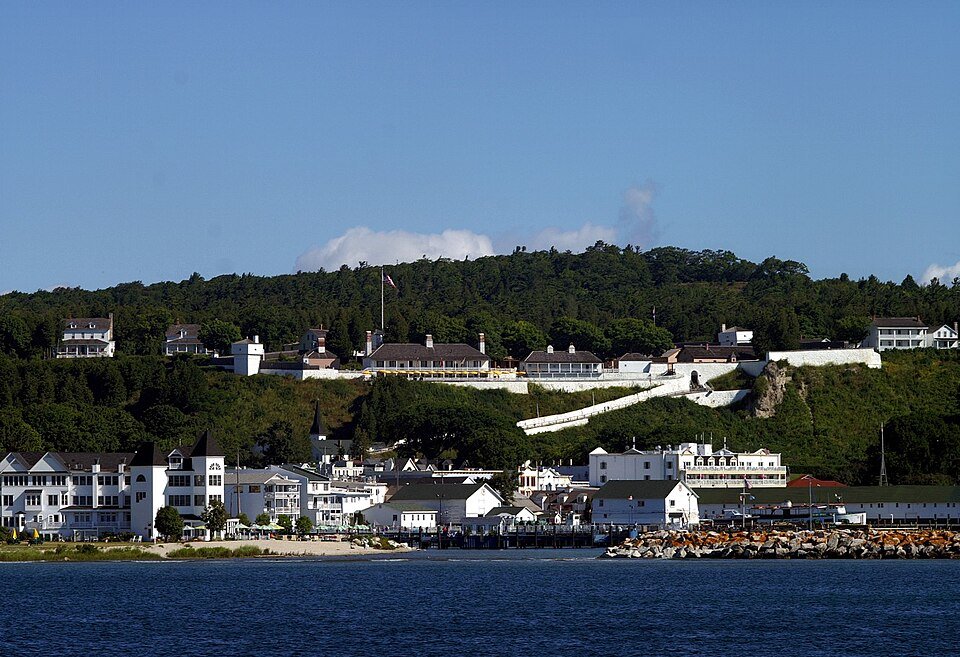
A limestone fort above the water where two Great Lakes meet.
Fort Mackinac stands on Mackinac Island, Michigan, on limestone bluffs about 150 feet above the Straits of Mackinac, the channel between Lake Michigan and Lake Huron. The British built it during the American Revolutionary War to control the straits and, with them, the fur trade of the Great Lakes. Before 1763 the French had held the area from Fort Michilimackinac on the mainland shore; the British who took it over found the wooden fort hard to defend, and in 1780 and 1781 their lieutenant governor, Patrick Sinclair, put up a new limestone one on the island.
Despite the terms of the 1783 peace treaty, the British did not hand the fort to the United States until the Jay Treaty was ratified in 1796. Closed in 1895, the old outpost was turned into a museum on the grounds of Mackinac Island State Park.
Captured without a fight in 1812, defended in 1814.
In July 1812, soon after the United States declared war on Britain, a force of British soldiers, Canadians and several hundred Native Americans came by canoe and landed on the north end of the island. The small American garrison, taken by surprise and badly outnumbered, surrendered without a fight, and the British paroled the men. The British then built Fort George, a stockade and blockhouse on the island's highest point. In July 1814, 700 American soldiers landed to retake the island. Fort George stood too high for the ships' guns, and the troops who advanced through the woods were hit by British fire in a clearing; 13 Americans were killed and 51 wounded, and they withdrew. The Americans reoccupied the fort in July 1815, after the Treaty of Ghent, and renamed Fort George as Fort Holmes.
In later decades the fort served as a troop reserve and fur-trade post. In 1822 its surgeon, Dr. William Beaumont, treated a fur trader who was badly hurt in an accidental shooting. The man survived, and Beaumont's later observations of his digestion made him known as the Father of Gastric Physiology. From 1875 to 1895 the fort sat inside Mackinac National Park, the second national park in the country after Yellowstone.
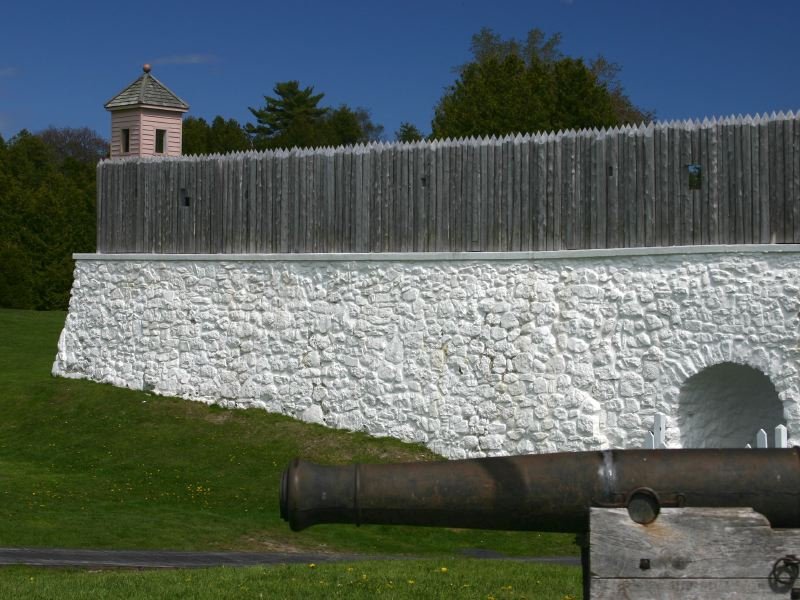
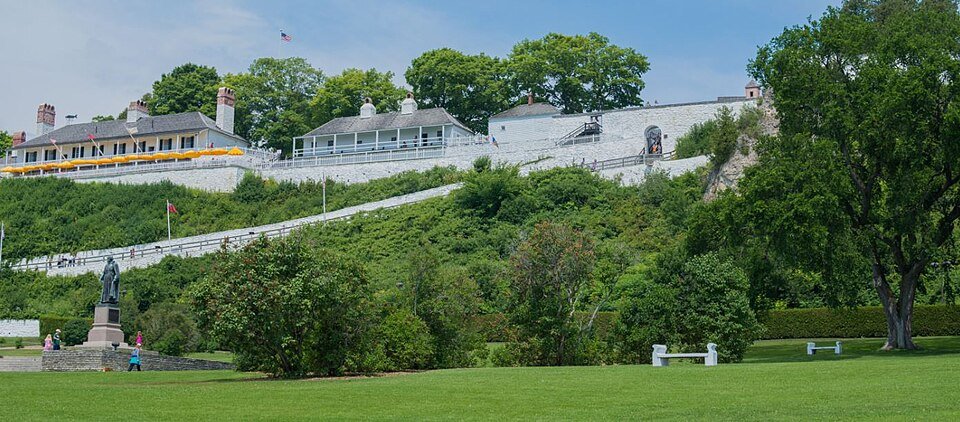
The fort on its bluff.
Practical notes.
Before you go.
Who built Fort Mackinac?
The British, in 1780 and 1781, during the American Revolutionary War. Lieutenant Governor Patrick Sinclair built it of limestone on a bluff on Mackinac Island.
What happened here in the War of 1812?
The British took the fort without a fight in July 1812. In July 1814 an American landing force was defeated in the Battle of Mackinac Island, and the Americans did not reoccupy the fort until July 1815.
Was Mackinac a national park?
Yes. From 1875 to 1895 Mackinac National Park, the second national park in the United States after Yellowstone, included Fort Mackinac and much of the island.
Can you visit Fort Mackinac today?
Yes, it is a museum on the grounds of Mackinac Island State Park. Check the official website for the current season, hours and access.
Around Michigan
Walking tours, day trips and experiences around this area, on GetYourGuide.