Hidden · Hueco Tanks, El Paso, United States
Hueco Tanks
Three rock mountains in the Chihuahuan Desert whose natural basins held water for travelers for millennia, and whose walls carry thousands of years of paintings.
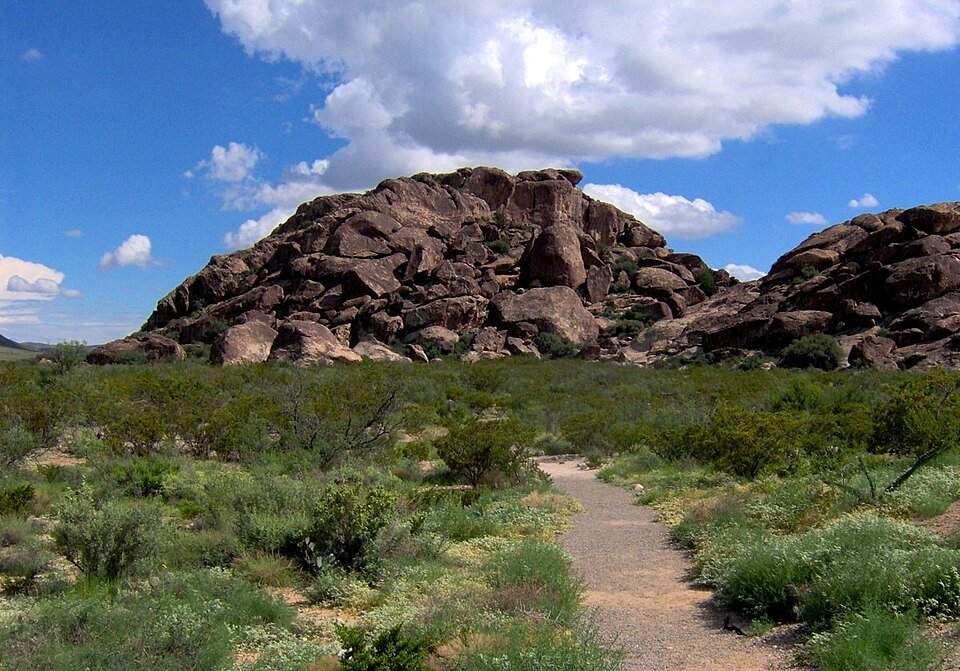
Rock basins that held water in the desert.
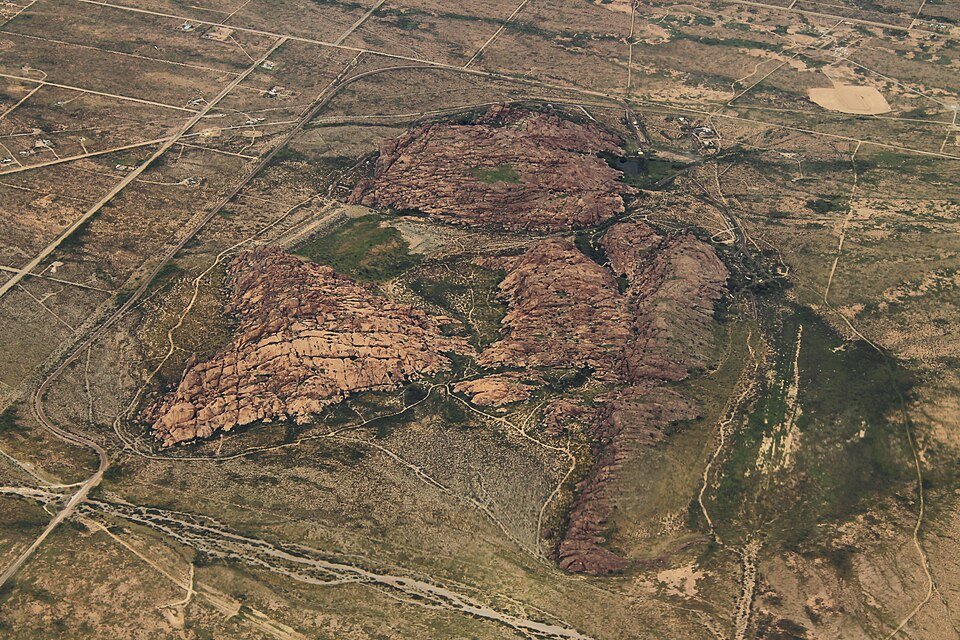
Hueco Tanks State Park and Historic Site covers 860 acres about 32 miles northeast of central El Paso, Texas. It is a National Historic Landmark managed by the Texas Parks and Wildlife Department. The low mountains rise in a high-altitude desert basin between the Franklin Mountains to the west and the Hueco Mountains to the east.
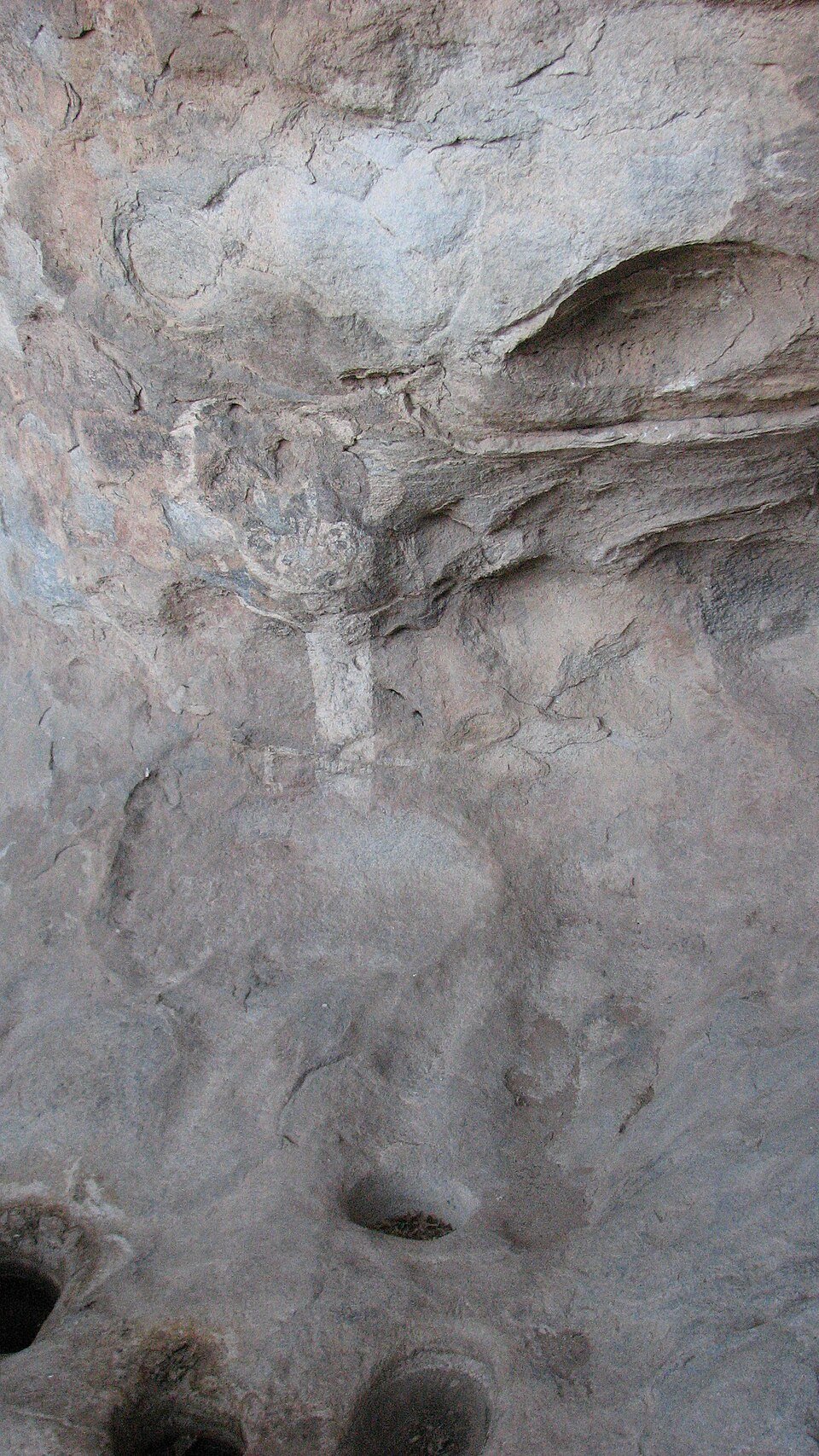
The park is made of three mountains of syenite, a rock similar to granite, that formed 34 to 38 million years ago and were exposed by weathering. Hueco is Spanish for "hollow." The name refers to the many natural basins in the rock that trap rainwater for months and once could hold a year's supply. In a region that gets less than 14 inches of rain a year, that water drew people for millennia.
Chihuahuan Desert scrub surrounds the outcrops, with creosote bush dominant. The water supports Arizona white oak and one-seed juniper that survive from the last ice age, and the park has the only population in the United States of the plant Colubrina stricta. In 2002, 222 bird species were documented here. Tadpole shrimp and Couch's spadefoot toads breed in the pools, so visitors are asked not to touch the water.
Ten thousand years of visitors left their marks.
People have used the site for about 10,000 years, from Desert Archaic hunter-gatherers to the Jornada Mogollon, who had a village here and grew corn. Later the Mescalero and Lipan Apache, Jumano, Comanche, Kiowa and Tigua used the area. The earliest paintings, abstract designs, date from 6000 to 3000 B.C. Most are Jornada Mogollon work, and Hueco Tanks holds the largest concentration of mask paintings by Native Americans in North America, with hundreds of them. Many figures depict the rain god Tlaloc. The colors came from local minerals.
Later visitors left names too. Texas Rangers and U.S. cavalrymen carved theirs, the earliest known modern graffiti dates to the 1840s, and someone painted "1849" over original pictographs. A stagecoach station stood nearby in 1858 and 1859. The Escontrías family ran the land as a ranch and tourist attraction from 1898 to 1956, and the park's information center is their old ranch house. It became a state park in 1970, joined the National Register of Historic Places in 1971 and was named a State Historic Site in 1998.
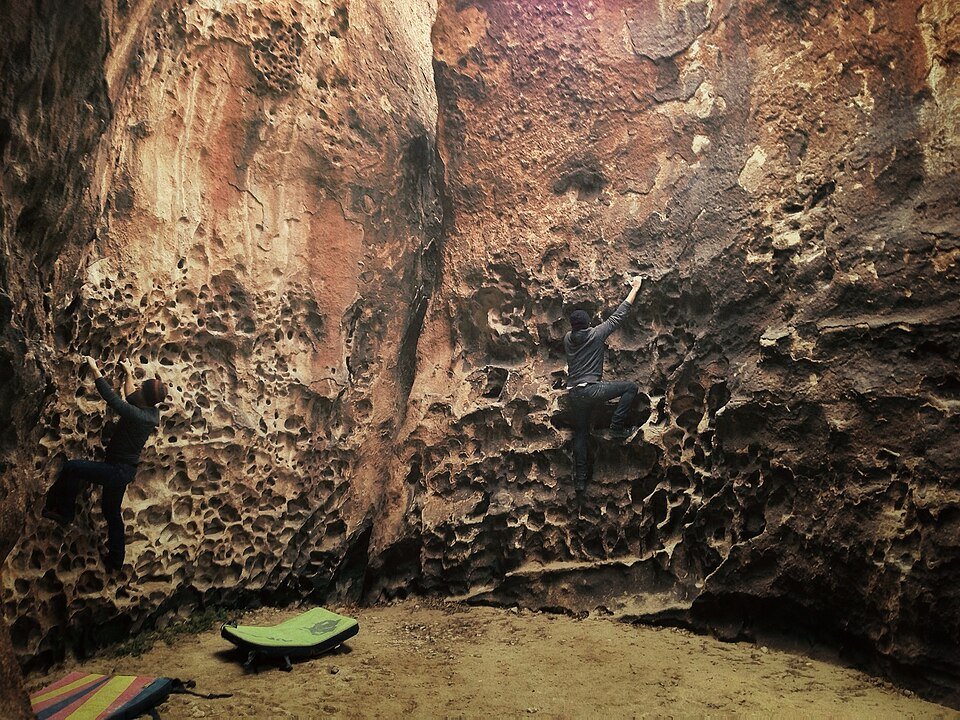
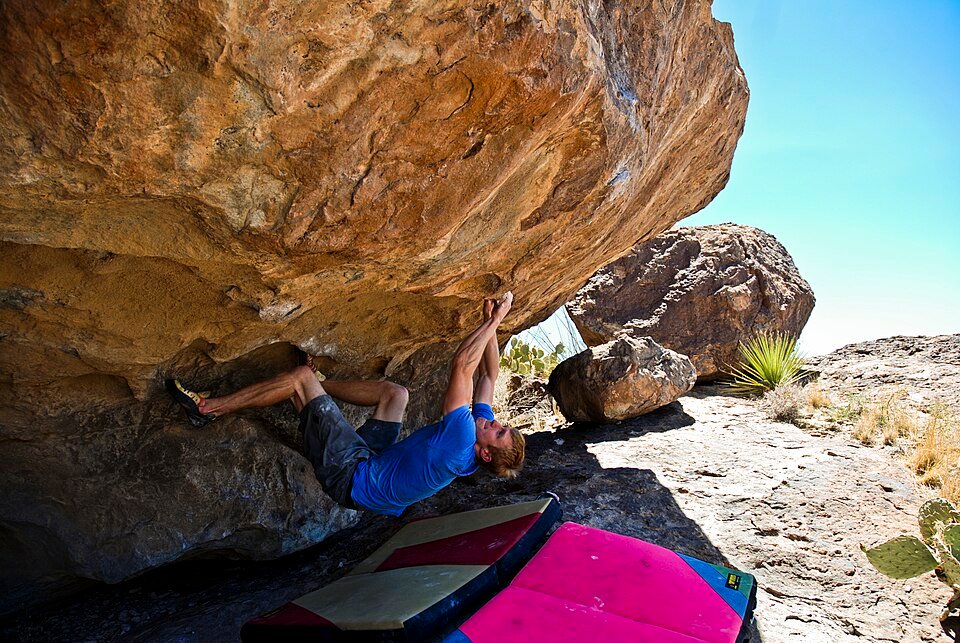
Hueco Tanks is also widely regarded as one of the best areas in the world for bouldering, with a season that generally runs from October through March and a competition held in February. After a public use plan began in June 2000, more than two-thirds of the park is open only on guided tours, and only North Mountain can be visited without a guide.
Rock, water and paintings.
Practical notes.
Before you go.
What does Hueco mean?
Hueco is Spanish for "hollow." It refers to the natural rock basins that trap rainwater and have supplied travelers in this dry region for millennia.
Can you visit without a guide?
Only part of North Mountain is open without a guide, and only to a limited number of people at once. The rest of the park is open on guided tours. Check Texas Parks and Wildlife for current rules.
What kind of rock art is here?
The park has pictographs from several periods, from abstract designs to animals, humans and masks. Hueco Tanks holds the largest concentration of mask paintings by Native Americans in North America.
Is Hueco Tanks good for climbing?
It is widely regarded as one of the best bouldering areas in the world, with a season that generally runs from October through March.
Around El Paso
Walking tours, day trips and experiences around this area, on GetYourGuide.