Hidden · Wilmington, Delaware, United States
Hagley Museum
The riverside powder yards where the du Pont family built the largest black powder factory in the world, now a museum of mills, machines and a family home.

Powder mills on the Brandywine, 235 acres of early industry.
The Hagley Museum and Library covers more than 235 acres along Brandywine Creek, near Wilmington, Delaware. The grounds hold restored mills, the powder yards, a 19th-century machine shop, a workers community and the first du Pont family home in the United States, with a Renaissance Revival garden of terraces and statuary on the hillside below it.
The home is a Georgian-style house built by Éleuthère Irénée du Pont, lived in by five generations of the family. It still shows furniture, American folk art and family pieces brought from France. Nearby are a barn, the company's first office and a workshop. The property also keeps notable old trees, including an Osage orange once named a national champion, partly lost in a storm in August 2020.
From the largest black powder factory to a museum.
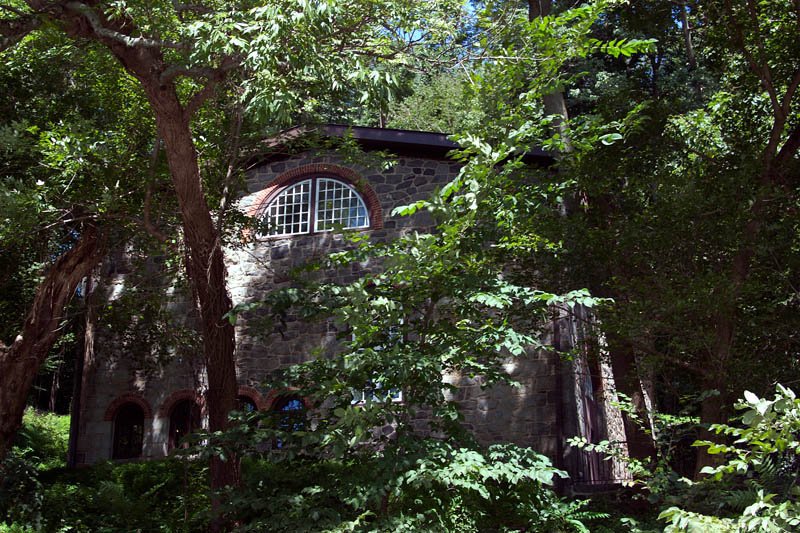
In 1802, the French immigrant Éleuthère Irénée du Pont started black powder mills on Brandywine Creek on land he bought in 1801. He picked the spot for the river's drop over the Fall Line, which gave water power, plus timber and willows for charcoal. The nearby Delaware River let him ship sulfur and saltpeter, and local gneiss quarries supplied building stone. The company became the largest black powder maker in the world. The name Hagley predates the du Ponts: the land was already called that in 1797.
The mills along the Brandywine closed in 1921. Plans for a museum came in 1952, at the company's 150th anniversary, and Hagley Museum was dedicated in 1957 with the opening of the Henry Clay Mill building. The du Pont home opened to the public in 1962 and the grounds were named a National Historic Landmark in 1966. The museum explains how early industry, the du Pont family and gunpowder were tied into American history, and the library next door holds a large research collection on American business and technology.
The mills and machines.


Practical notes.
Before you go.
What is Hagley Museum?
A nonprofit museum and library on more than 235 acres along Brandywine Creek, near Wilmington, Delaware. It preserves the du Pont black powder mills, a workers community and the first du Pont family home in the United States.
Why did du Pont build mills here?
The river's drop over the Fall Line gave power, and the area had timber, willows for charcoal, nearby gneiss quarries and the Delaware River for shipping sulfur and saltpeter.
When did the powder mills close?
The mills along the Brandywine closed in 1921. The museum was planned in 1952 and dedicated in 1957.
How do you see the du Pont home?
The home is visited by a narrated bus tour along the Powder Yard Trail. Check the official site for current operations before you visit.
Around Delaware
Walking tours, day trips and experiences around this area, on GetYourGuide.