Hidden · Demopolis, Alabama, United States
Gaineswood
A Greek Revival mansion in Demopolis that took almost twenty years to build, now a historic house museum that also tells the story of the people who built it.
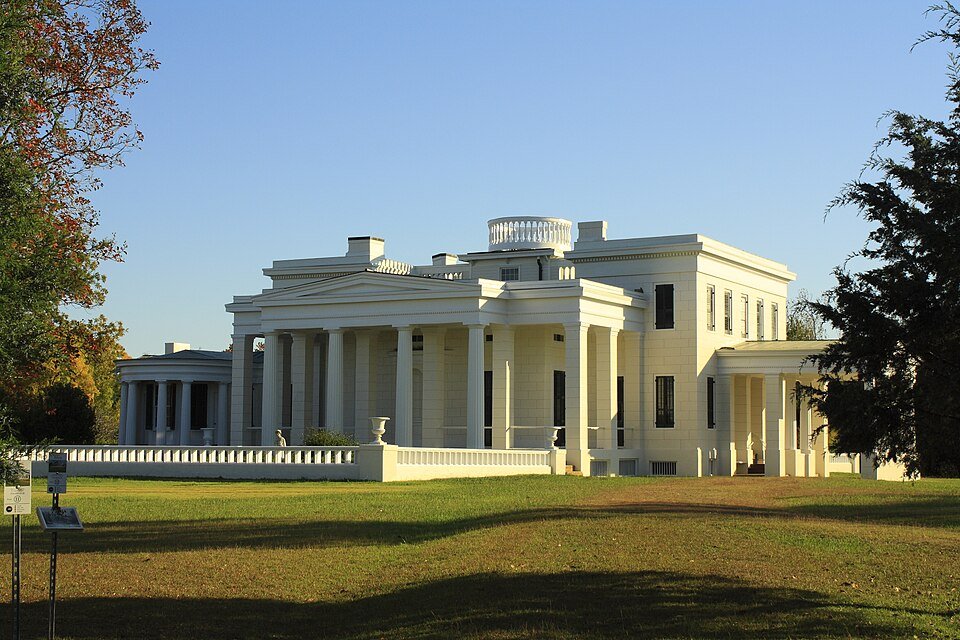
A mansion that uses all three Greek orders, with a ring on the roof.
Gaineswood stands in Demopolis, Alabama, and is one of the best remaining examples of Greek Revival architecture in the state. It reached its present form in 1861, after almost 20 years of construction. Its owner, Nathan Bryan Whitfield, a cotton planter, drew up most of the design himself from architectural pattern books.
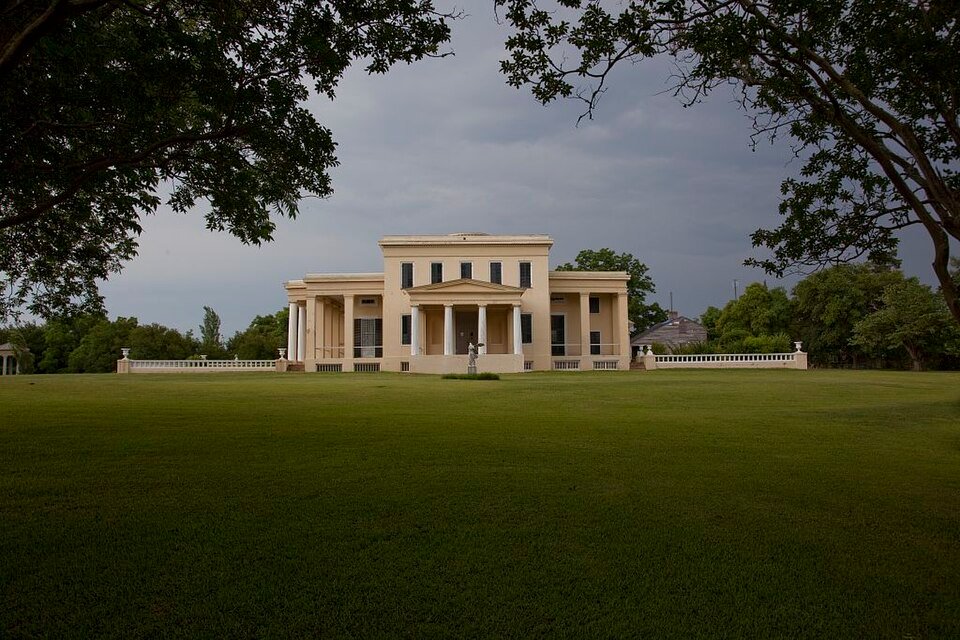
The house is unusual. It uses all three ancient Greek orders, Doric, Ionic and Corinthian, which few Greek Revival homes in the country do, and because it was finished when tastes were turning to the Italianate style, its plan is partly asymmetrical. Outside, stucco over brick imitates blocks of cut stone, and eighteen fluted Doric columns and 14 square pillars hold up the porches. A ring with a balustrade crowns the roof and was used to look over the estate.
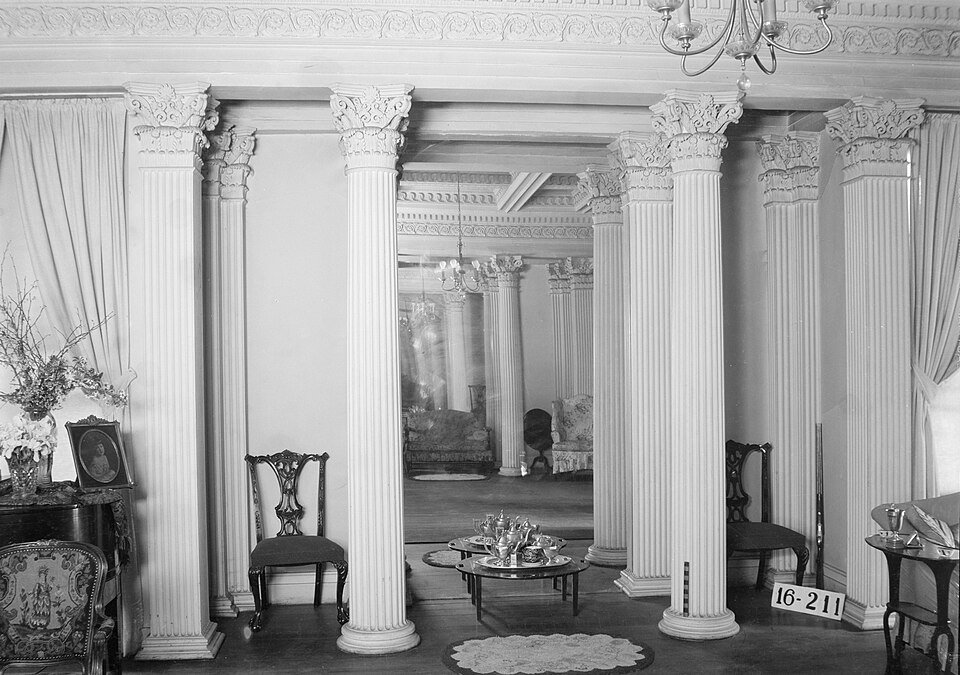
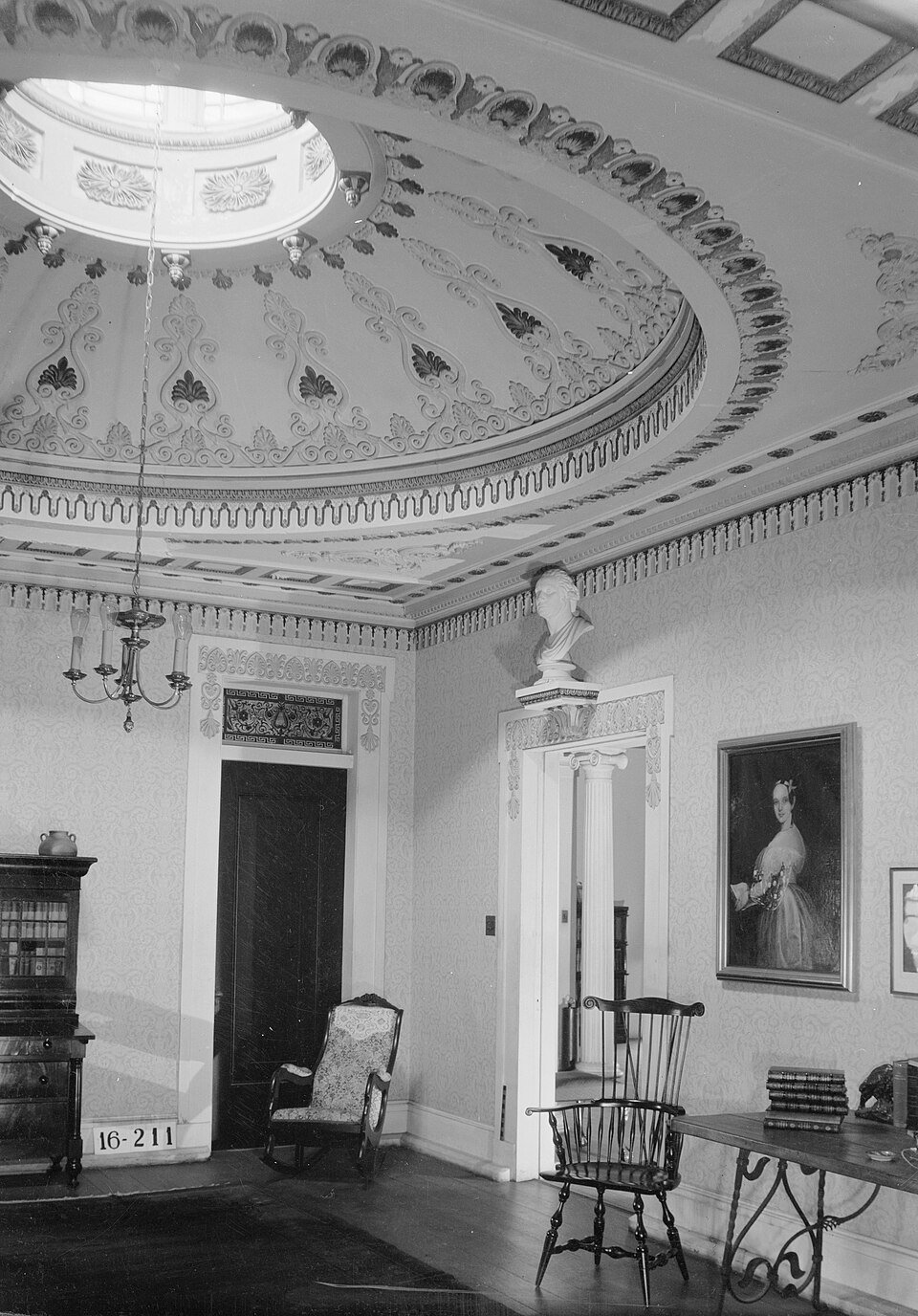
Inside, the ballroom has four fluted Corinthian columns and 24 matching pilasters, with mirrors facing each other and a coffered ceiling. The library and the dining room both have domed ceilings with skylights. The grounds keep a cook's house, a garden pavilion with eight Corinthian columns and a monumental gatehouse, all from before the Civil War.
Built by enslaved labor, and a treaty oak in the yard.
The house was paid for with the profits of forced labor, and enslaved people did much of the actual building. Whitfield started in 1843 with a simple log dwelling, bought the property in 1842 from George Strother Gaines, and renamed it Gaineswood in 1856 in his honor. By 1860 he owned as many as 7,200 acres and 235 enslaved people. No quarters for the enslaved residents survive on the grounds.
Enslaved workers also dug, by hand, a drainage canal of about a mile that is more than 30 feet deep in places, to keep water from flooding the plantation and send it to the Tombigbee River. Before Whitfield, while Gaines was a U.S. Indian agent, he is said to have met the Choctaw leader Pushmataha under an old post oak on this land to negotiate the treaty that led to the Choctaw removal to Indian Territory. The tree was known as the Pushmataha Oak.
The Whitfield family sold the house in 1923, and the State of Alabama bought it in 1966 to preserve it as a museum. The Alabama Historical Commission runs it today. It is on the National Register of Historic Places and became a National Historic Landmark in 1973.
The mansion inside and out.
Practical notes.
Before you go.
What makes Gaineswood unusual?
It is one of the few Greek Revival homes in the United States to use all three ancient Greek orders, Doric, Ionic and Corinthian. It was also finished as tastes shifted toward Italianate, so its layout is partly asymmetrical.
Who built Gaineswood?
Nathan Bryan Whitfield designed it and began it in 1843, but much of the construction was done by enslaved people. Skilled artisans also worked on it. It was completed in 1861.
What is the Pushmataha Oak?
A post oak on the grounds where, the story goes, a U.S. Indian agent met the Choctaw leader Pushmataha to negotiate the treaty that led to the Choctaw removal to Indian Territory.
Can you visit Gaineswood?
It is run as a historic house museum by the Alabama Historical Commission. Hours and tour days change, so check the commission's website for current details.
Around Alabama
Walking tours, day trips and experiences around this area, on GetYourGuide.