Hidden · Oracle, Tucson, United States
Biosphere 2
A 3.14-acre glass and steel vivarium at the foot of the Santa Catalina Mountains, built to test whether people could live sealed inside their own ecosystem.
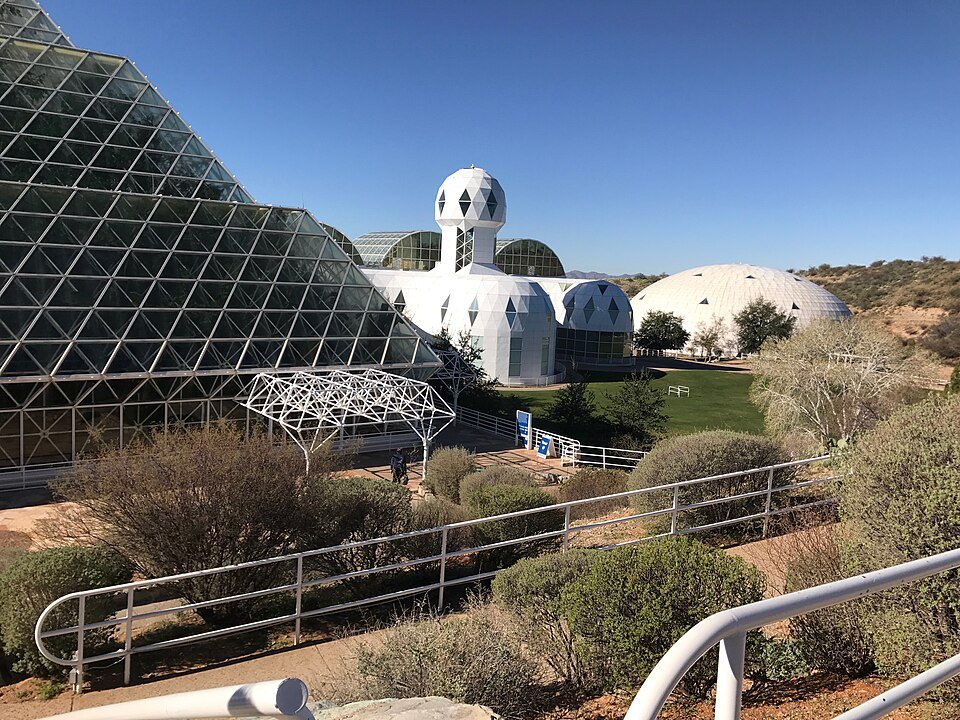
A sealed world with seven biomes under glass.
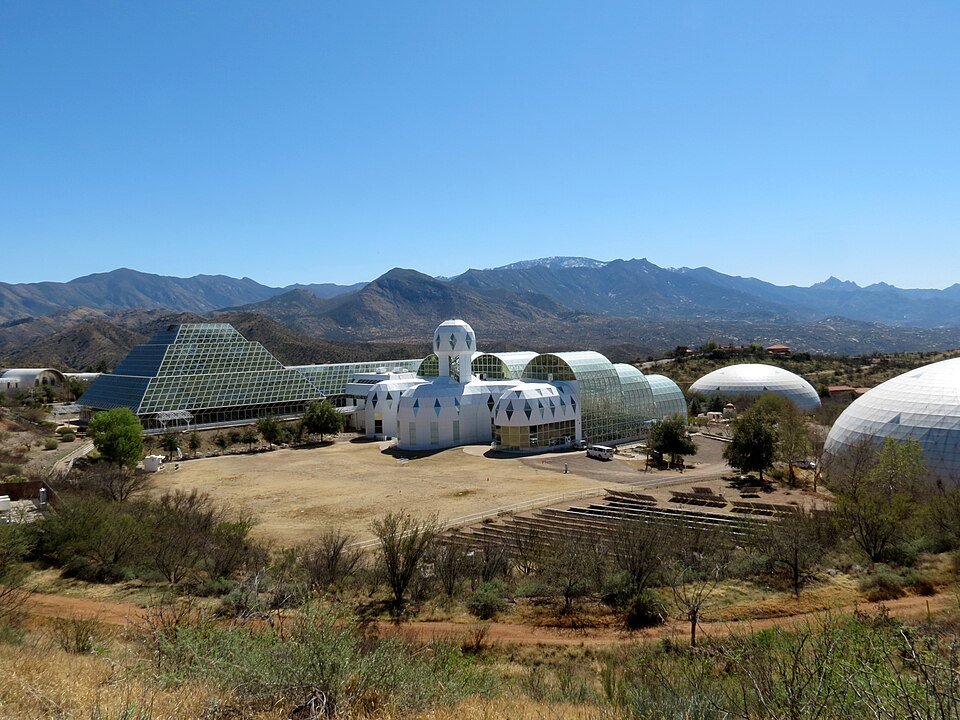
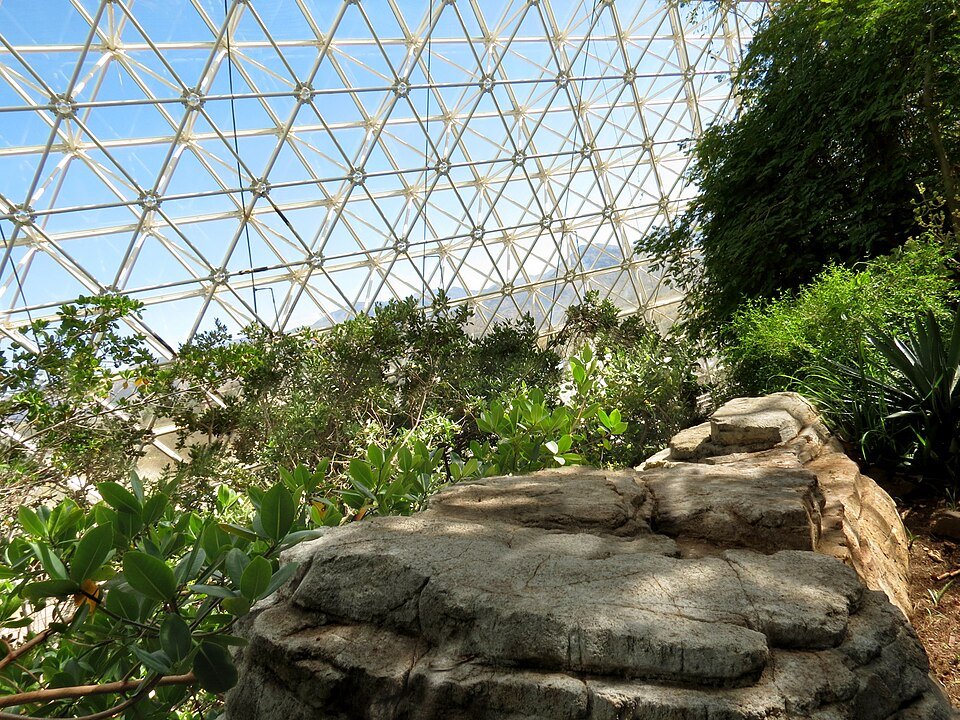
Biosphere 2 sits in Oracle, Arizona, at the base of the Santa Catalina Mountains, about 50 minutes north of Tucson and around 4,000 feet (1,200 m) above sea level. It covers 3.14 acres and remains the largest closed ecological system ever created. It was built between 1987 and 1991 to test whether closed ecological systems could support human life in outer space.
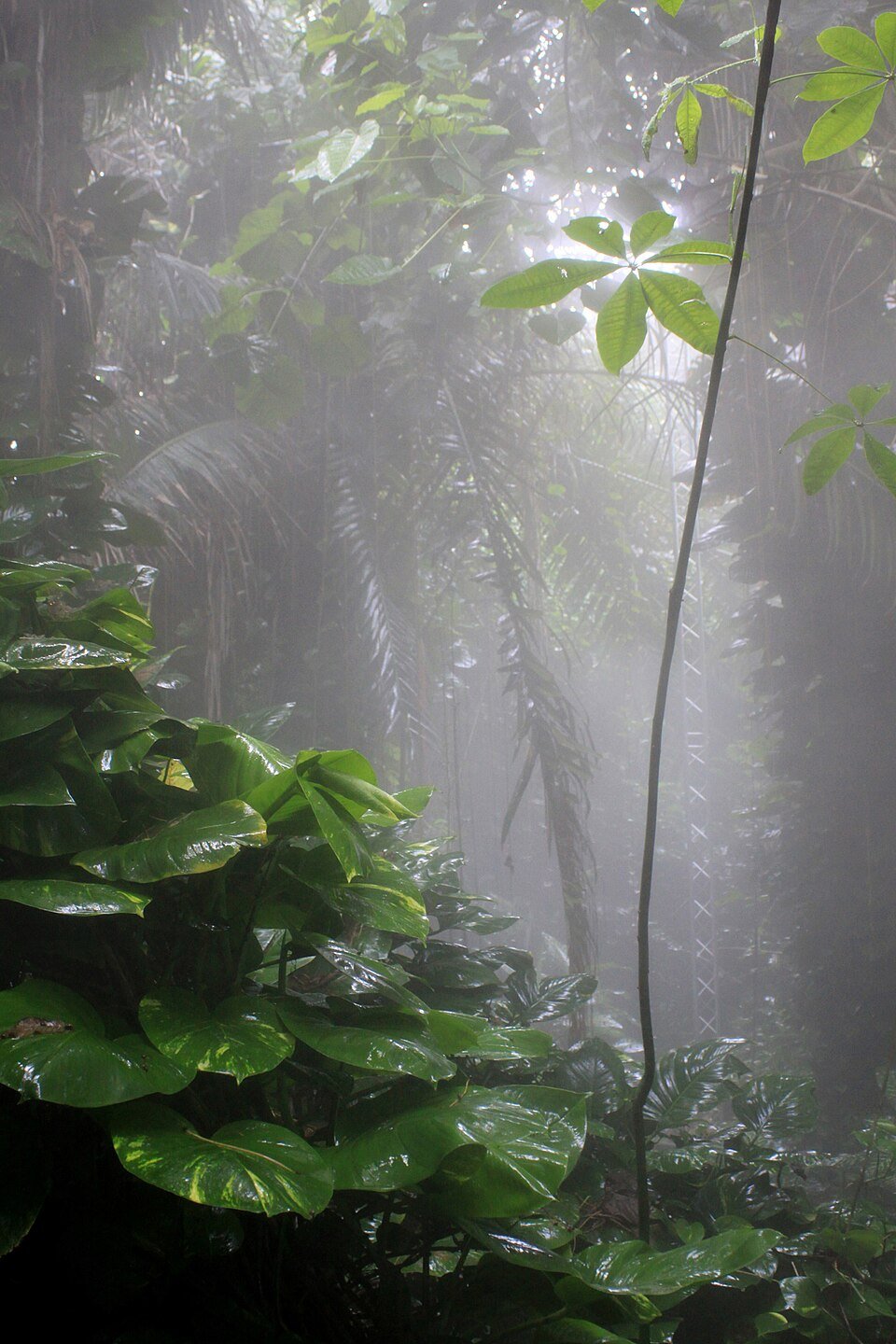
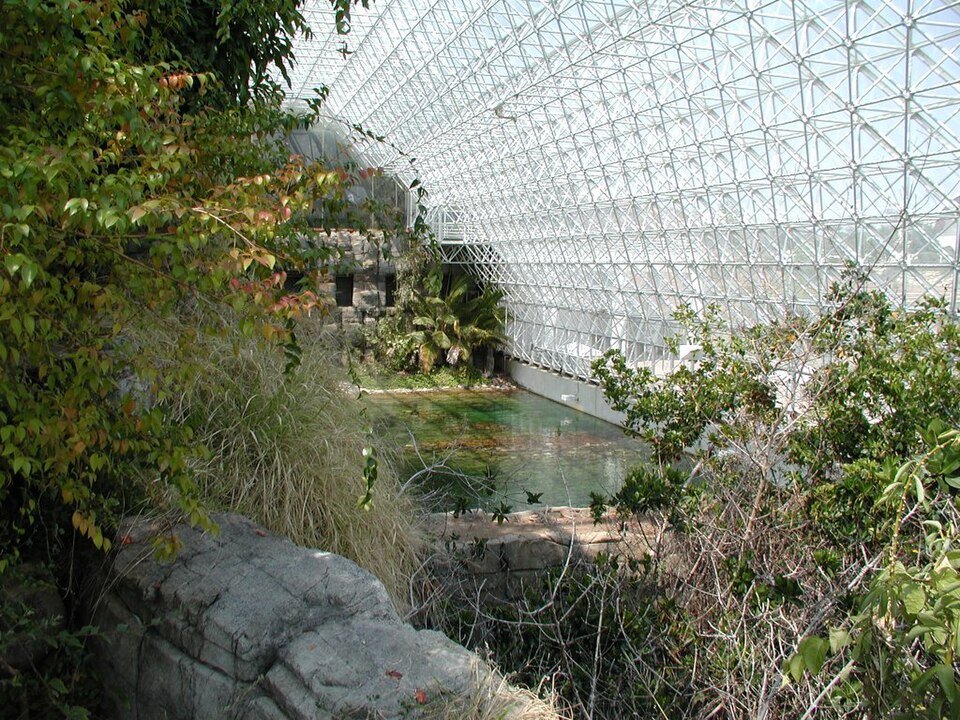
Its biome areas were a rainforest of 1,900 square meters, an ocean with a coral reef of 850 square meters, a mangrove wetland of 450, a savannah grassland of 1,300 and a fog desert of 1,400, plus two human-made areas: a 2,500 square meter agricultural system and a habitat with living spaces, laboratories and workshops.
The structure is steel tubing and high-performance glass, sealed so tightly that it leaked less than 10 percent of its air per year. Because air expands in daytime heat and contracts at night, large diaphragms in domes called “lungs” absorbed the changes in volume. A natural gas power plant on site supplied electricity.
Two closed missions, then a second life as a lab.
The name means it was meant to be the second fully self-sufficient biosphere, after Earth itself. The first closed mission ran from September 26, 1991, to September 26, 1993, with a crew of eight, four women and four men. The farm produced 83 percent of the crew’s diet, but the crew reported constant hunger, and many animals and plants died, which the planners had expected, since they had deliberately packed in extra species. Tensions also grew among the crew and between the managers.
A second, shorter mission ran from March to September 1994. It ended early, but it reached total food sufficiency and did not need extra oxygen. In June 1994 the managing company, Space Biosphere Ventures, was dissolved, and the facility was left in limbo.
Columbia University managed it from 1995 to 2003. It was at risk of demolition until the University of Arizona took it over for research in 2007, and the university has owned it since 2011. Research continues, and the facility is open to the public. It is one of two enclosed artificial ecosystems in the Americas open to visitors, the other being the Montreal Biodome.
Inside and outside Biosphere 2.

Practical notes.
Before you go.
Why is it called Biosphere 2?
Because it was meant to be the second fully self-sufficient biosphere, after Earth itself, which is Biosphere 1.
How many people lived inside?
A crew of eight, four women and four men, lived inside during the first closed mission from 1991 to 1993. A second mission followed in 1994.
Who runs Biosphere 2 today?
The University of Arizona, which took over research there in 2007 and became the full owner in 2011.
Where is Biosphere 2?
In Oracle, Arizona, at the base of the Santa Catalina Mountains, about 50 minutes north of Tucson.
Around Tucson
Walking tours, day trips and experiences around this area, on GetYourGuide.