Hidden · Collinsville, St. Louis, United States
Cahokia Mounds
The remains of the largest Native American city north of Mexico, with about 80 earthen mounds just across the Mississippi from St. Louis.
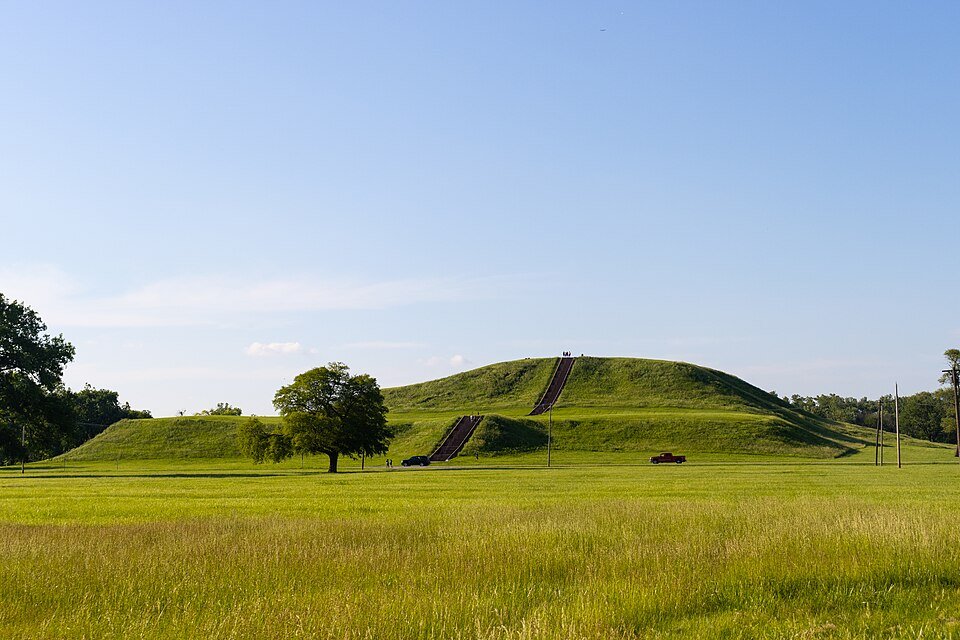
A planned city of earth, directly across from St. Louis.
Cahokia Mounds is the site of a Native American city that existed from about 1050 to about 1350 AD, directly across the Mississippi River from present-day St. Louis. The state archaeology park lies in southwestern Illinois, between East St. Louis and Collinsville. It covers 2,200 acres and holds about 80 manmade mounds, but the ancient city was much larger.
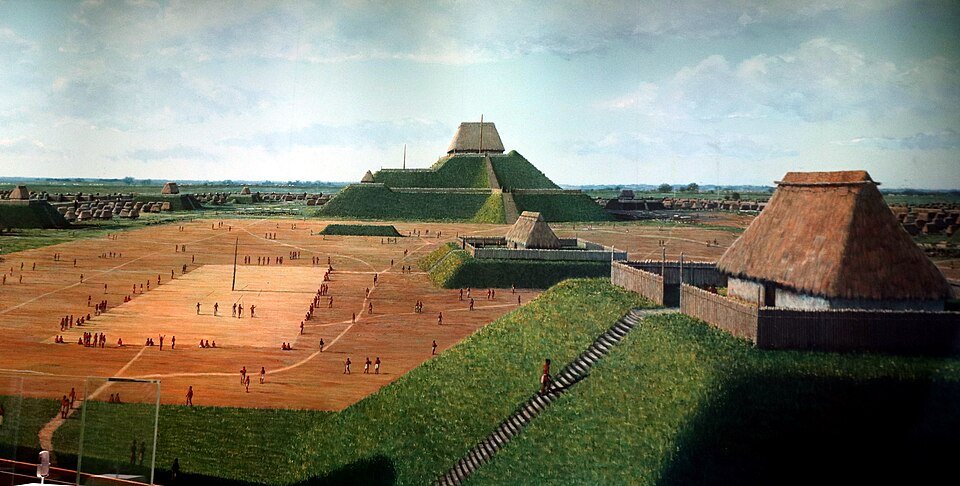
At its height, around 1100 AD, the city covered about 6 square miles and included roughly 120 earthworks of many sizes, shapes and functions. Its population is usually put at 15,000 to 20,000 people, though archaeologists’ estimates range much wider. It was the largest and most influential urban settlement of the Mississippian culture, and today it is considered the largest and most complex archaeological site north of the great pre-Columbian cities of Mexico.
The city’s original name is unknown. The mounds are named after the Cahokia tribe, a people living in the area when French explorers arrived in the 17th century, centuries after the city had been abandoned.
Built by hand, basket by basket, and abandoned within centuries.
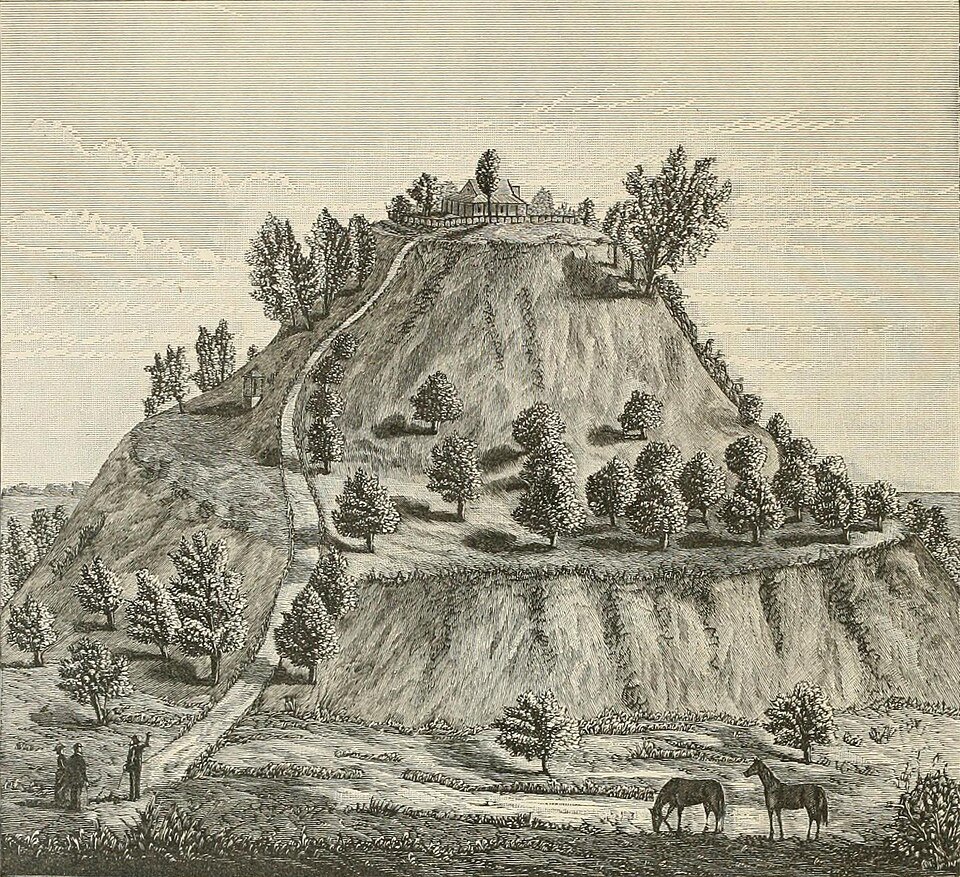
Mound building here began around the 9th century, and the city grew fast after about 1050. It was laid out on an ordered grid oriented around a Grand Plaza and the Rattlesnake Causeway, with dozens of mounds. All the digging and hauling was done by hand with woven baskets, and the work used about 55 million cubic feet of earth over decades.
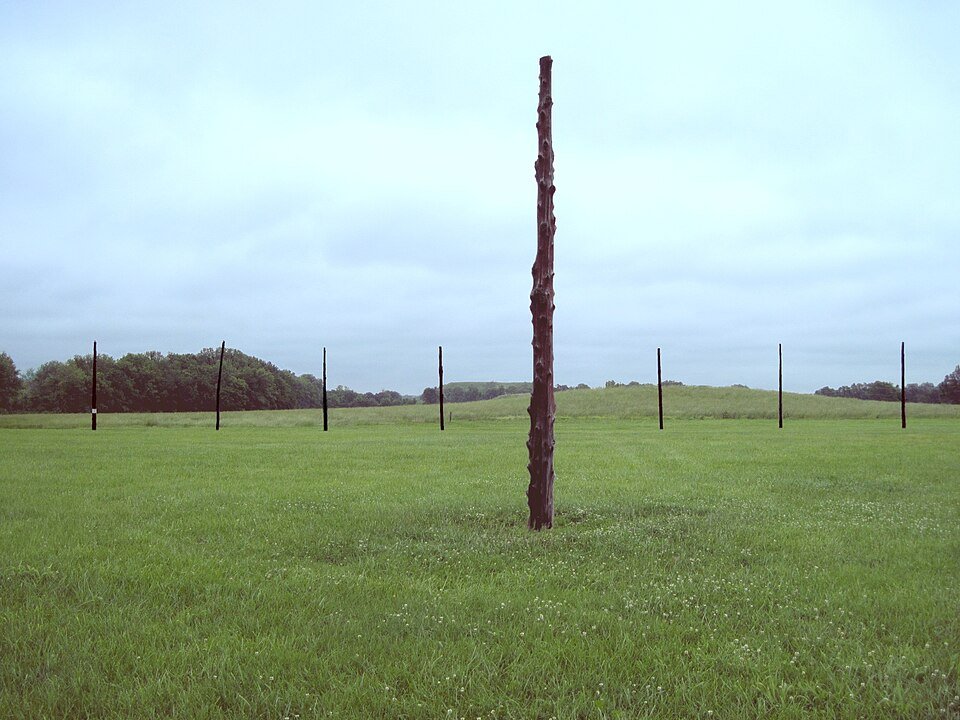
Cahokia sat near the meeting point of the Mississippi, Missouri and Illinois rivers and traded with communities as far away as the Great Lakes and the Gulf Coast, in goods such as copper, shark teeth and shells. Its builders left no written records beyond symbols on pottery, shell, copper, wood and stone. Archaeologists read the plazas, mounds, a woodhenge and burials as signs of a complex society in which religion helped hold political power together.
People began leaving in larger numbers in the late 12th century. By the middle of the 13th century the population had fallen by half or more, and by 1350 the city was abandoned. Scholars have proposed explanations that include environmental factors. The site is now a National Historic Landmark and one of the 26 UNESCO World Heritage Sites in the United States.
The mounds and the ancient city.
Practical notes.
Before you go.
What was Cahokia?
A Native American city that existed from about 1050 to about 1350 AD. It was the largest and most influential urban settlement of the Mississippian culture.
How big was Cahokia?
At its peak, around 1100 AD, it covered about 6 square miles and had roughly 120 earthworks. Estimates of its population range widely, with 15,000 to 20,000 people a common figure.
Who built the mounds?
People of the Mississippian culture, working by hand with woven baskets to move about 55 million cubic feet of earth over decades. The name Cahokia comes from a later tribe, not from the city’s builders.
Where is Cahokia Mounds?
In southwestern Illinois, between East St. Louis and Collinsville, directly across the Mississippi River from St. Louis, Missouri.
Around St. Louis
Walking tours, day trips and experiences around this area, on GetYourGuide.