Hidden · Larned, Kansas, United States
Fort Larned
A frontier fort on the Santa Fe Trail whose sandstone buildings still stand on the Kansas plains, among the best-preserved forts of the Indian Wars era.

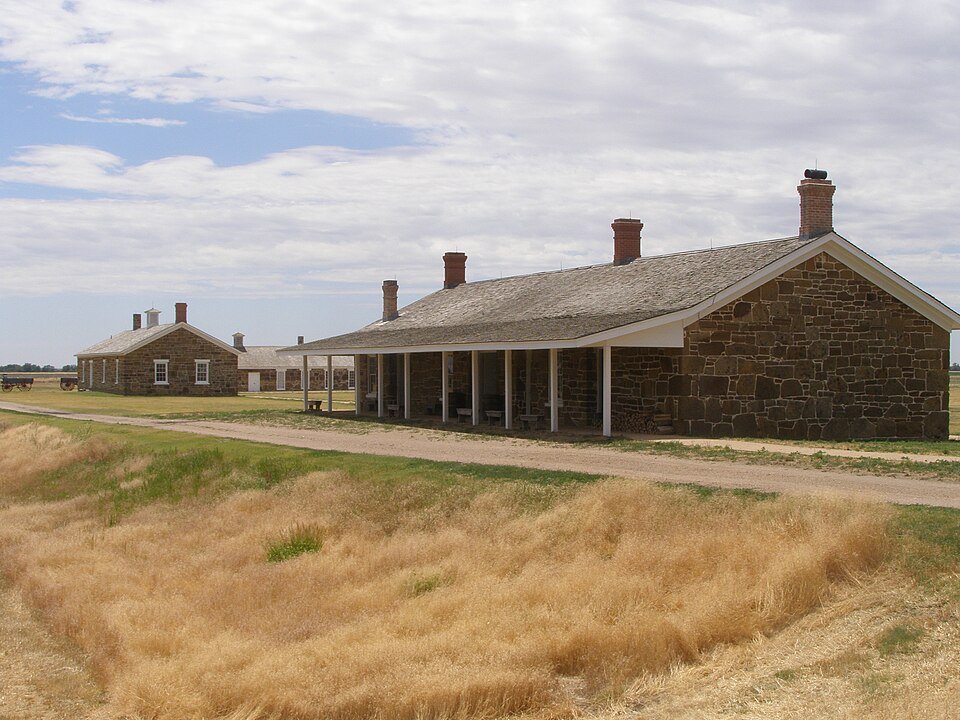
Nine sandstone buildings on the Santa Fe Trail.
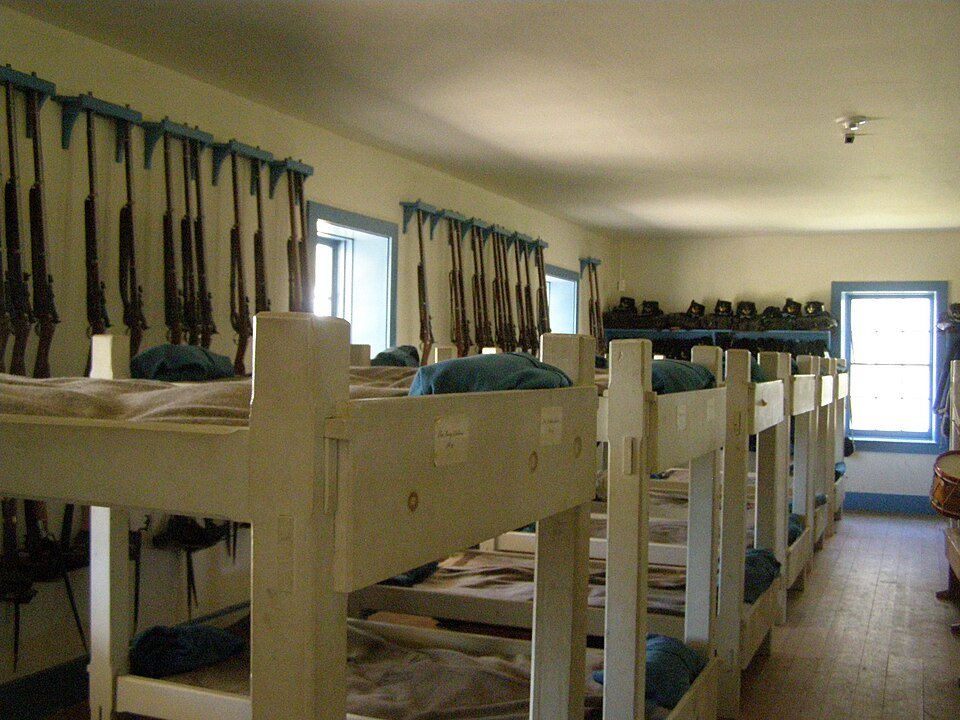
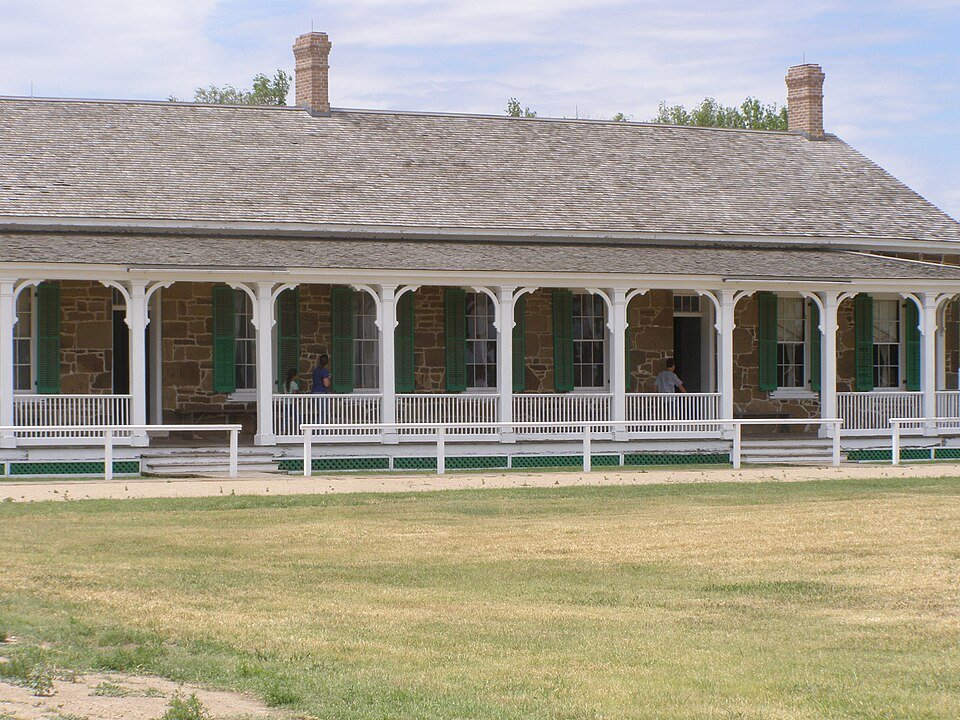
Fort Larned National Historic Site preserves a fort that operated from 1859 to 1878, a few miles west of Larned, Kansas. Nine historic buildings survive, and the site is described as one of the best-preserved examples of an Indian Wars-period fort. Most of the barracks, commissary and officers' quarters are furnished to look as they once did.
Each building had a job. The barracks housed infantry and cavalry on the north side. Skilled civilian tradesmen such as blacksmiths and carpenters handled repairs in the shops, and the bakery stood at the north end. The Old Commissary and the Quartermaster Storehouse held supplies and have loopholes for rifle fire. Officers' Row was designed to house the officers of four companies.
The blockhouse was the first sandstone structure finished. It had two floors with loopholes and an underground well. As the threat of attack faded, it became the post prison, with the well tunnel partly filled and used for solitary confinement. It is the only sandstone building that has been completely rebuilt, on its original foundation.
Guarding a trade route, then losing the reason to exist.
The post began in October 1859 as the Camp on Pawnee Fork to protect traffic on the Santa Fe Trail. It was renamed Camp Alert in 1860, moved upstream that May and renamed Fort Larned. It also served as an agency for the administration of Plains peoples by the Bureau of Indian Affairs. Trade along the trail had grown fast, and William Bent, an agent for the Upper Arkansas Indians, picked the location. The fort and the town are named for Colonel Benjamin F. Larned, the Army's paymaster general, who never came to Kansas.
The first buildings were adobe and poorly built. Between 1866 and 1868 they were replaced with the sandstone buildings seen today. During the Civil War, volunteer troops from Kansas, Colorado and Wisconsin ran the post as regular soldiers went east, and raids on travelers increased. In July 1864 Kiowa raiders stole 172 horses and mules from the corral, and from 1865 wagon trains went west only under armed escort. In 1867 a meeting between General Winfield Scott Hancock and Cheyenne chiefs at the fort was followed by the burning of a Cheyenne and Lakota village, the start of a summer of warfare known as Hancock's War. Fort Larned later helped bring that war to an end by supplying the Medicine Lodge Treaty.
The 10th U.S. Cavalry, one of the first two all-Black cavalry units in the country, was stationed here from 1867 to 1869. Its stables burned down in January 1869, killing dozens of horses, and the unit was reassigned. Escorts were no longer needed by 1871. The fort's service ended as the tribes were relocated to reservations and railroads crossed Kansas, and the post was abandoned in 1878. From 1885 to 1966 the buildings housed a ranch headquarters. The site became a National Landmark in 1961 and a unit of the National Park System in 1964.
The fort buildings.

Practical notes.
Before you go.
What was Fort Larned for?
It protected traffic on the Santa Fe Trail from 1859, and it also served as an agency for the administration of Plains peoples by the Bureau of Indian Affairs.
How much of the fort is original?
Nine historic sandstone buildings survive. They replaced the original adobe structures between 1866 and 1868, and the blockhouse is the only one that has been completely rebuilt on its original foundation.
Who was stationed at Fort Larned?
Many Army and volunteer units over its 19 years, including the 10th U.S. Cavalry from 1867 to 1869, one of the first two all-Black cavalry units in the country.
Why did the fort close?
Railroads crossed Kansas, ending the need for the Santa Fe Trail, and the tribes had been moved to reservations. The post was abandoned in 1878.
Around Kansas
Walking tours, day trips and experiences around this area, on GetYourGuide.