Hidden · Andersonville, Georgia, United States
Andersonville
A Confederate prison camp in rural Georgia where thousands of Union soldiers died, now a National Historic Site with a national cemetery and a museum of prisoners of war.

A stockade built for far fewer people than it held.
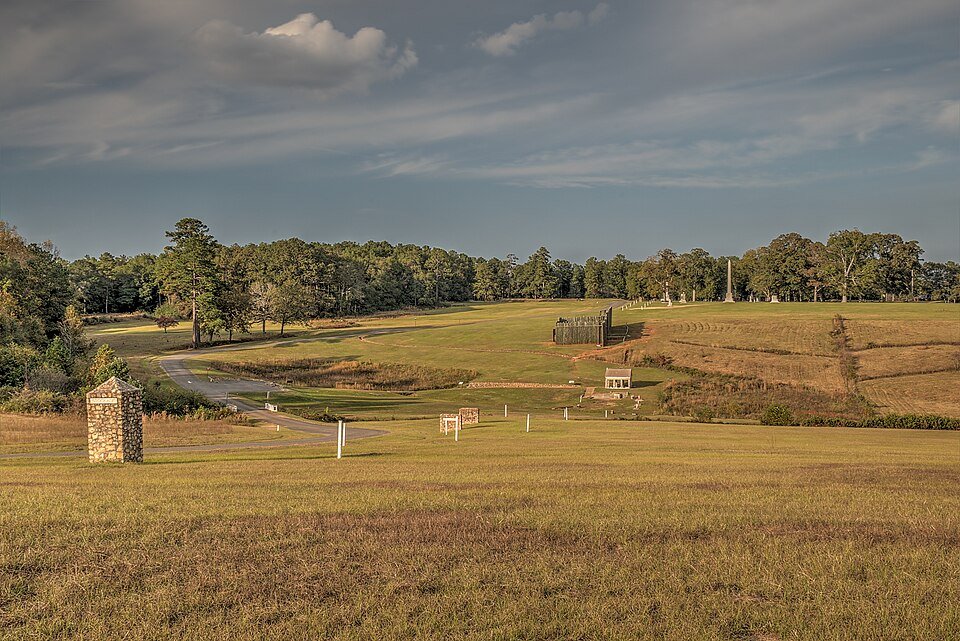
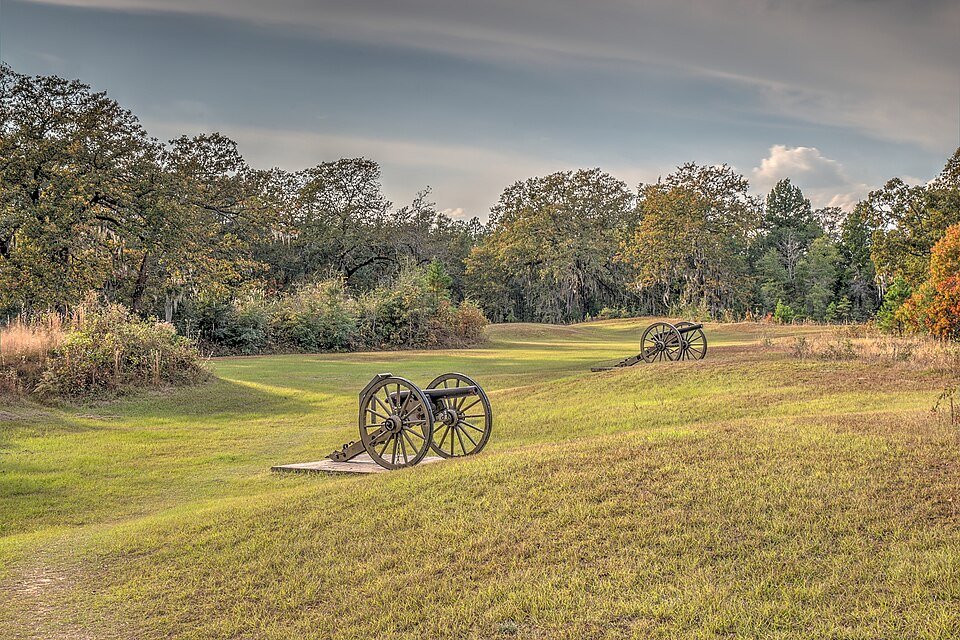
Andersonville Prison, also called Camp Sumter, stood beside the town of Andersonville in southwestern Georgia. It was created in February 1864 and used until April 1865, the last fourteen months of the Civil War. Today the ground is the Andersonville National Historic Site, which also holds the Andersonville National Cemetery and the National Prisoner of War Museum.
The camp began as a rectangular stockade of about 16.5 acres, walled with logs about 15 feet high. In June 1864 it was enlarged to 26.5 acres. Even so, it was packed to roughly four times its capacity, leaving each man a space of about 5 by 6 feet. A light fence known as the dead line ran inside the wall, and anyone who crossed it could be shot by the guards.
About 45,000 men entered; nearly 13,000 did not leave.
Of the roughly 45,000 Union prisoners held at the camp, nearly 13,000 died, about 28 percent. Food was scarce and poorly prepared, firewood was limited, and the only drinking water came from a creek that also served as the latrine. Scurvy, diarrhea and dysentery were the main causes of death, and the dead were buried in mass graves.
Historians still argue about why so many died. Some see Confederate policy and war crimes; others point to disease, overcrowding, food shortages across the Confederacy, incompetent officials and the collapse of prisoner exchanges. Diaries kept by prisoners, and a secret list of the dead copied by one of them and published after the war, are part of how the camp is understood today.
The camp's commander, Captain Henry Wirz, was tried and executed after the war for war crimes. Visitors should treat the site as what it is: a burial ground and a memorial.
The site today.


Practical notes.
Before you go.
What was Andersonville?
A Confederate prisoner-of-war camp, also called Camp Sumter, in southwestern Georgia. It operated from February 1864 to April 1865 and held about 45,000 Union prisoners.
How many prisoners died at Andersonville?
Nearly 13,000 of the roughly 45,000 men held there died, mostly from scurvy, diarrhea and dysentery.
What can you see at the site today?
The Andersonville National Historic Site preserves the camp grounds and includes the Andersonville National Cemetery and the National Prisoner of War Museum.
What was the dead line?
A light fence set about 19 feet inside the stockade wall. Prisoners who crossed or touched it were shot by sentries without warning.
Around Georgia
Walking tours, day trips and experiences around this area, on GetYourGuide.