Hidden · Fredericksburg, Fredericksburg, Texas, United States
Enchanted Rock
A bare pink granite dome north of Fredericksburg, Texas, with a name that comes from legends of ghost fires and a rock that groans at night.
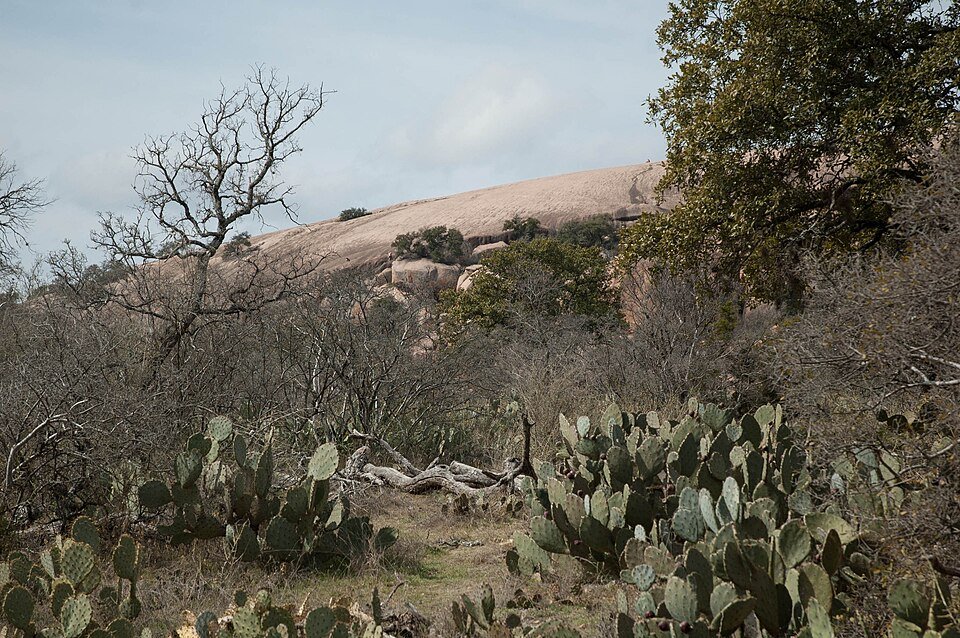
The largest pink granite monadnock in the United States.
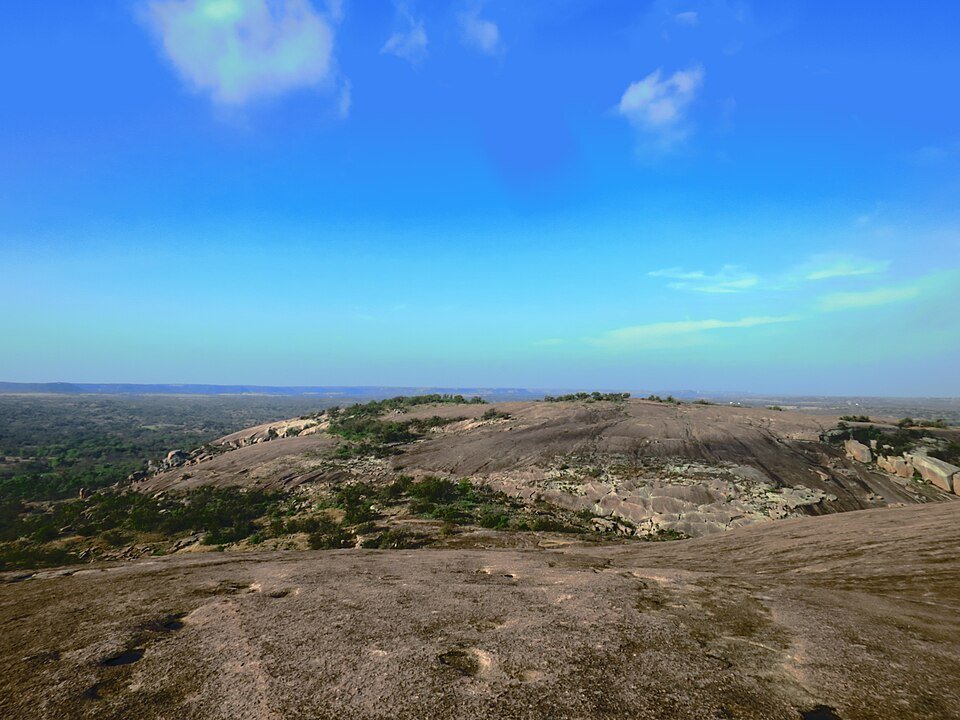
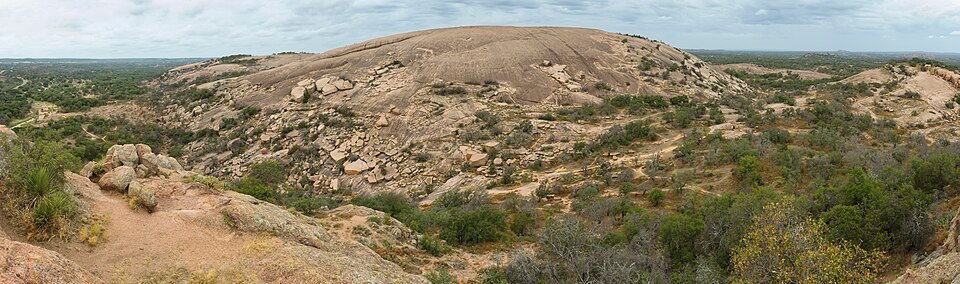
Enchanted Rock is a pink granite dome in the Llano Uplift, about 17 miles north of Fredericksburg, Texas, and 24 miles south of Llano. The state natural area around it straddles the line between Gillespie and Llano counties. The rock covers roughly 640 acres and rises about 425 feet above the surrounding land, to 1,825 feet above sea level. The National Park Service designated it a National Natural Landmark in 1971.
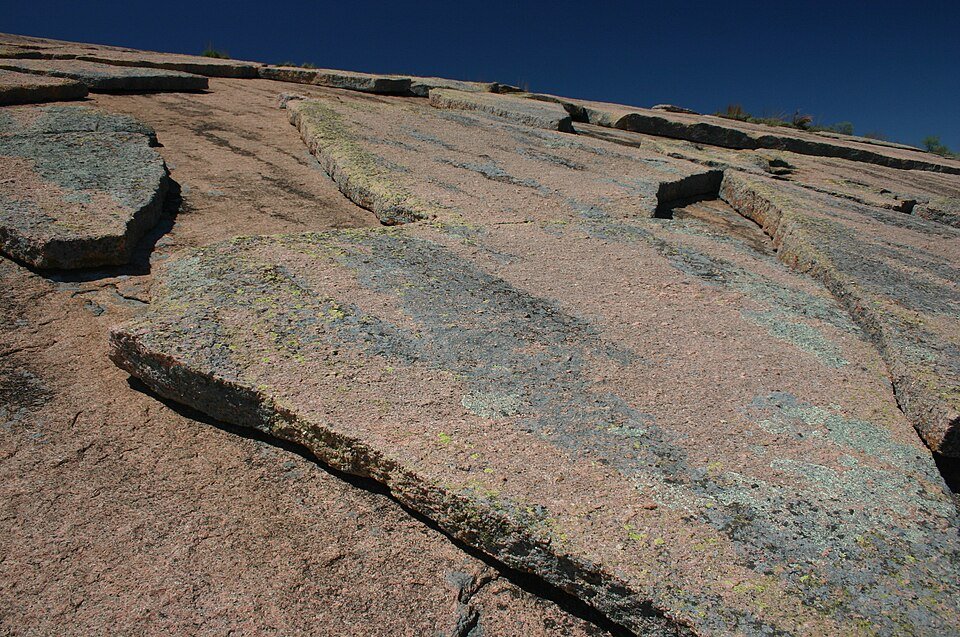
Geologists call a dome like this a monadnock. It is only the visible top of a much larger mass of granite, the Town Mountain Granite, which formed about 1,082 million years ago and pushed up into older schist. Erosion stripped away the surrounding sedimentary rock, mainly Cretaceous limestone, and left the granite standing above the plain.
Wildlife includes white-tailed deer, ringtail, armadillo, roadrunner and Texas horned lizard, and shallow pools on the rock hold fragile fairy shrimp. More than 500 plant species grow across four communities: open oak woodland, mesquite grassland, floodplain and the granite rock itself.
Ghost fires, a groaning rock and thousands of years of visitors.
Archaeological evidence points to people visiting the rock for at least 11,000 years. The oldest authenticated projectile point found in the park, a Plainview point, is about 10,000 years old.
Tonkawa, Apache and Comanche folklore gives the rock magical and spiritual powers, and that is where its name comes from. The Tonkawa, who lived in the area in the 16th century, believed ghost fires flickered on top of the dome, and they heard unexplained creaking and groaning, which geologists attribute to the rock contracting at night after being heated by the sun. The name Enchanted Rock comes from Spanish and Anglo-Texan interpretations of these stories; “Crying Rock” is another name. The first European to visit was probably Álvar Núñez Cabeza de Vaca, in 1536.
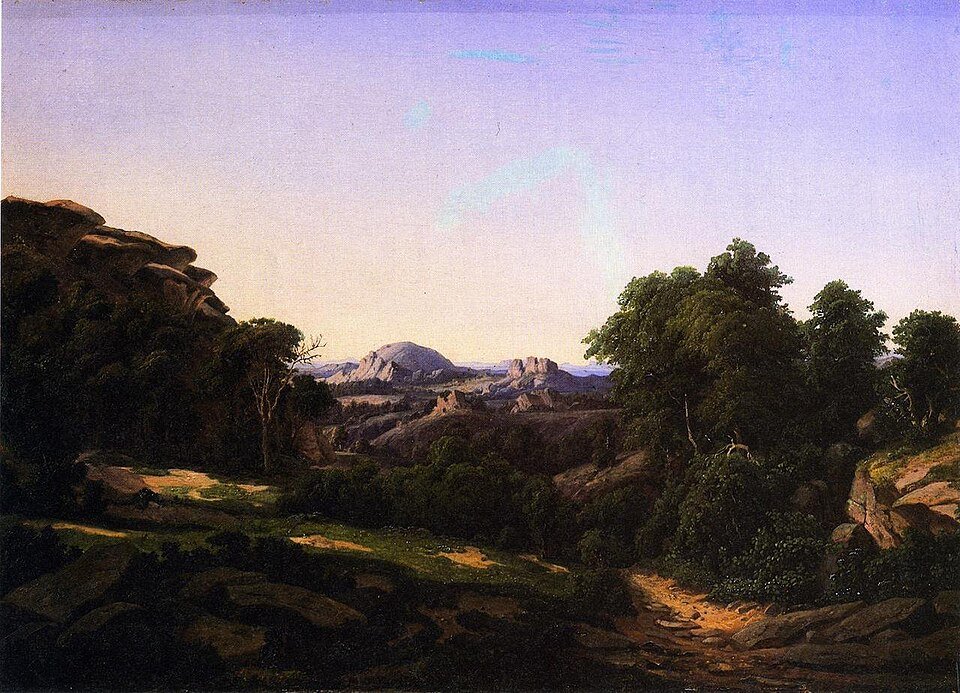
Artists have long drawn on the rock. One of the earliest known depictions is an 1864 painting by Hermann Lungkwitz, who made at least six paintings of the site, and a nine-panel mural of an aerial view of the rock hangs in the Austin airport. Today the Texas Parks and Wildlife Department manages the area with the nonprofit Friends of Enchanted Rock, and visitors are asked not to disturb plants, animals or artifacts.
The dome and its granite.

Practical notes.
Before you go.
Why is it called Enchanted Rock?
Local Tonkawa, Apache and Comanche folklore gave the rock magical and spiritual powers. The name comes from Spanish and Anglo-Texan interpretations of those legends, and “Crying Rock” is another name for it.
Why does the rock make noises at night?
Geologists attribute the creaking and groaning to the granite contracting at night after the sun has heated it during the day.
How big is Enchanted Rock?
It covers roughly 640 acres and rises about 425 feet above the surrounding terrain, to 1,825 feet above sea level.
Can you bring a dog to Enchanted Rock?
Pets are not allowed on the summit trail. Check the park’s official page for the rules in other areas.
Around Fredericksburg, Texas
Walking tours, day trips and experiences around this area, on GetYourGuide.